
Comets And Asteroids Likely Enhanced Life-Supporting Habitat On Red Planet
MessageToEagle.com – The bombardment of Mars some 4 billion years ago by comets and asteroids likely enhanced climate conditions enough to make the planet more conducive to life, at least for a time, according to a new study by researchers from the University of Colorado Boulder.
If early Mars was as barren and cold as it is today, massive asteroid and comet impacts would have produced enough heat to melt subsurface ice, said CU-Boulder Professor Stephen Mojzsis.
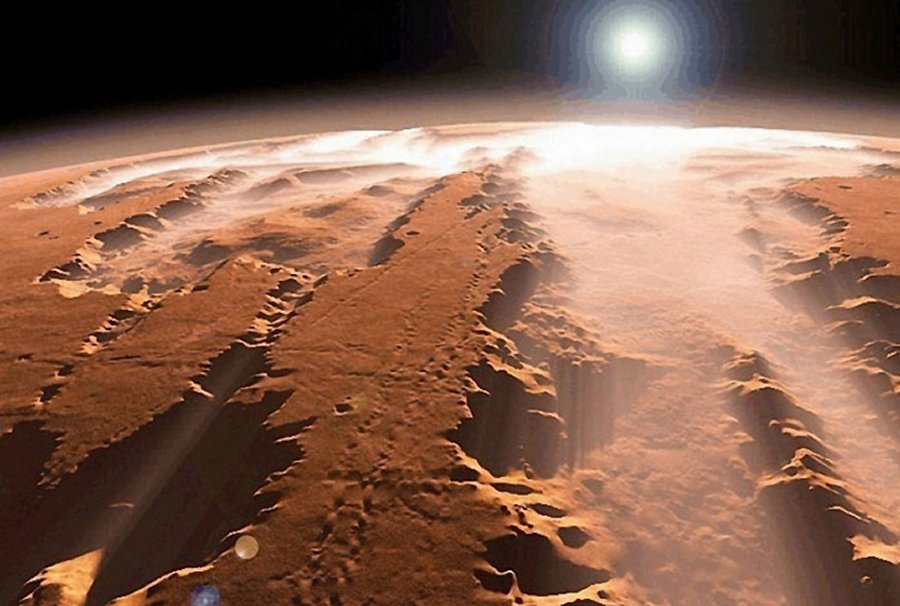
The impacts would have produced regional hydrothermal systems on Mars similar to those in Yellowstone National Park, which today harbor chemically powered microbes, some of which can survive boiling in hot springs or inhabiting water acidic enough to dissolve nails.
In addition to producing hydrothermal regions in portions of Mars’ fractured and melted crust, a massive impact could have temporarily increased the planet’s atmospheric pressure, periodically heating Mars up enough to “re-start” a dormant water cycle, Mojzsis explained, in a press release.
Much of the action on Mars occurred during a period known as the Late Heavy Bombardment about 3.9 billion years ago when the developing solar system was a shooting gallery of comets, asteroids, moons and planets.
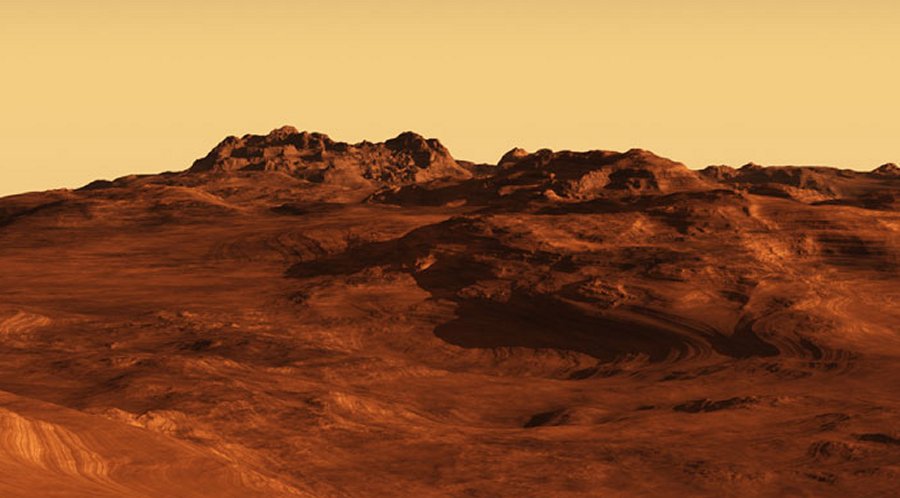
Unlike Earth, which has been “resurfaced” time and again by erosion and plate tectonics, heavy cratering is still evident on Mercury, Earth’s moon and Mars, Mojzsis said.
Researchers used the Janus supercomputer cluster at the University of Colorado Computing facility for some of the 3-D modeling necessary for their study.
They looked at temperatures beneath millions of individual craters in their computer simulations to assess heating and cooling, as well as the effects of impacts on Mars from different angles and velocities.
A single model comprising the whole surface of Mars took up to two weeks to run on the supercomputer cluster, said Mojzsis.
The research is published in Earth and Planetary Science Letters.
MessageToEagle.com
Expand for referencesReferences:
Related Posts
-
 Universe Will Be ‘Wiped Out’ Billions Of Years From Now – Physicists Say
-
 ‘Feeding Habits’ Of White Hungry Dwarf Stars – New Discovery
-
 Nuclear Pasta, Neutron Stars And The Strongest Known Material In The Universe
-
 Red Alert: Massive Stars Sound Warning They Are About To Go Supernova
-
 New Research Explains Earth’s Peculiar Chemical Composition
-
 Trigger for Milky Way’s Youngest Supernova Identified
-
 Hubble Presents: Galaxy NGC 6052 Located In The Constellation Of Hercules
-
 A Kilometer-Sized Kuiper Belt Object Discovered
-
 Water Vapor Have Been Detected In The Smallest Exoplanet’s Atmosphere
-
 ‘Lonely Cloud’ Bigger Than Milky Way Discovered In A Galaxy ‘No-Man’s Land’

