
Three Tropical 380-Million-Year-Old Fossil Forests Unearthed In Arctic Norway
MessageToEagle.com – UK researchers have unearthed ancient fossil forests, thought to be partly responsible for one of the most dramatic shifts in the Earth’s climate in the past 400 million years.
The fossil forests, with tree stumps preserved in place, were found in Svalbard, a Norwegian archipelago situated in the Arctic Ocean.
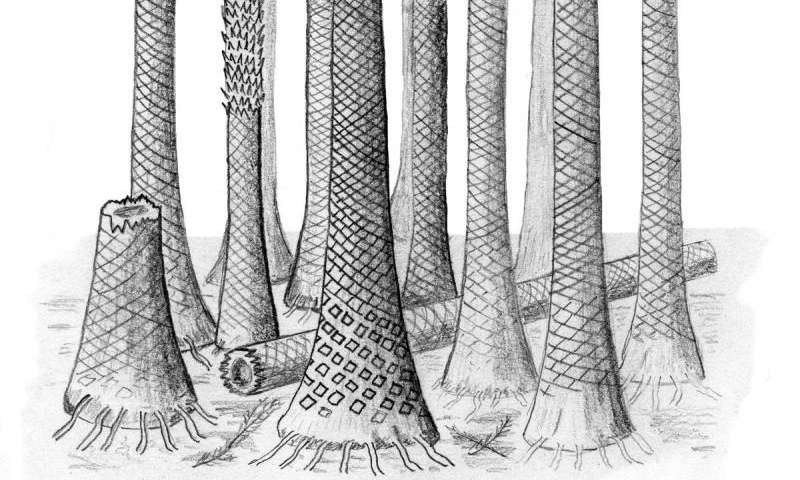
They were identified and described by Dr Chris Berry of the School of Earth and Ocean Sciences and dated to 380 million years by Prof John Marshall, of Southampton University.
The forests grew near the equator during the late Devonian period (420-360 million years ago), when our planet experienced a dramatic climate shift.
“These fossil forests shows us what the vegetation and landscape were like on the equator 380 million years ago, as the first trees were beginning to appear on the Earth,” said Dr Berry.
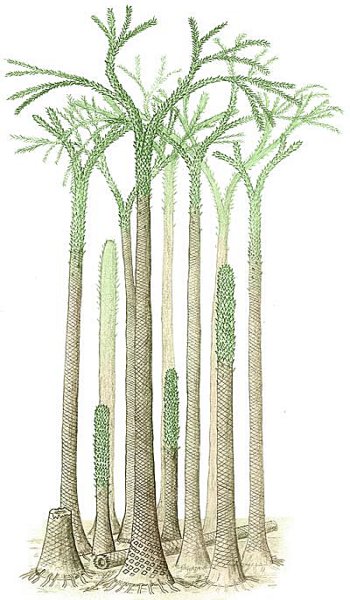
Current theories suggest that during the Devonian period there was a huge drop in the level of carbon dioxide (CO2) in the atmosphere, thought to be largely caused by a change in vegetation from diminutive plants to the first large forest trees.
Forests pulled CO2 out of the air through photosynthesis – the process by which plants create food and tissues – and the formation of soils.
Although initially the appearance of large trees absorbed more of the sun’s radiation, eventually temperatures on Earth also dropped dramatically to levels very similar to those experienced today because of the reduction in atmospheric CO2.
Because of the high temperatures and large amount of rainfall on the equator, it is likely that equatorial forests contributed most to the drawdown of CO2.
Svalbard was located on the equator around this time, before the tectonic plate drifted north by around 80° to its current position in the Arctic Ocean.
The team found that the forests in Svalbard were formed mainly of lycopod trees, better known for growing millions of years later in coal swamps that eventually turned into coal deposits – such as those in South Wales.
They also found that the forests were extremely dense, with very small gaps – around 20cm – between each of the trees, which probably reached about 4m high.
“During the Devonian Period, it is widely believed that there was a huge drop in the level of carbon dioxide in the atmosphere, from 15 times the present amount to something approaching current levels.
“The evolution of tree-sized vegetation is the most likely cause of this dramatic drop in carbon dioxide because the plants were absorbing carbon dioxide through photosynthesis to build their tissues, and also through the process of forming soils.”
The new findings have been published in the journal Geology.
MessagetoEagle.com
source: Cardiff University
Related Posts
-
 Warmer Ocean Will Hold Fewer Animals – New Study Shows
-
 Link Between Captain Cook’s 1778 Records And Global Warming Discovered
-
 A Giant Lava Lamp Inside The Earth Might Be Flipping The Planet’s Magnetic Field
-
 Why Does Earth Wobble As It Spins? Scientists Have Identified The Causes
-
 Coincidences Decide When Ice Ages Begin And End – Scientists Say
-
 Beirut Explosion: Terrible Blast That Shook The Ionosphere
-
 Underwater Seismometer Detected Previously Unknown Persistent Shaking Of Greenland’s Glacier
-
 Ancient Fossils Reveal Climate Altered Humans’ Body And Brain Size
-
 Earth’s Magnetic Field Is Weakening Much Faster Than Expected
-
 Increased Violence During Climatic Change In Early Andean Populations – A Study

