
Ancient ‘Yahweh And His Asherah’ Inscriptions At Kuntillet ‘Ajrud Remain An Unsolved Biblical Mystery
Ellen Lloyd – MessageToEagle.com – An ancient drawing and curious inscriptions discovered at Kuntillet ‘Ajrud in the Sinai Desert are intriguing Biblical mysteries that still remain unsolved.
Biblical scholars, historians and archaeologists have long debated whether the figures found on an ancient drawing storage jar depict Yahweh and his Asherah or someone else.
In 1975, while excavating at Kuntillet ‘Ajrud archaeologists unearthed unique artifacts. Among them were two large pithoi, or storage jars, that weighed about 30 pounds each.
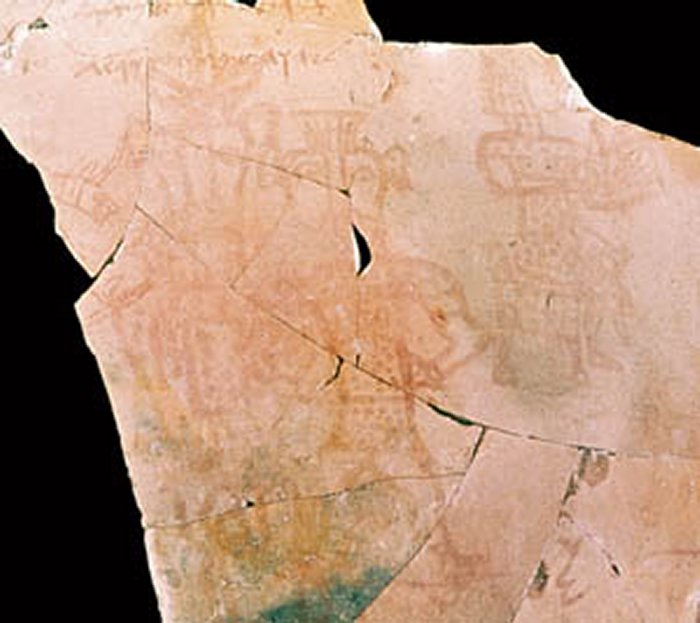
Reconstruction of the ancient jars revealed they were painted with animals, symbols, humans, deities and several inscriptions. It is believed the drawing were made over a considerable period and by several different artists. The iconography is entirely Syrian/Phoenician and lacks any connection to the Egyptian models.
The inscriptions are mostly in early Hebrew with some in Phoenician script. Many of the inscriptions are religious in nature, invoking Yahweh, El and Baal.
What created an intense debate are the inscriptions that include the phrases “Yahweh of Samaria and his Asherah” and “Yahweh of Teman and his Asherah.
Who or what was Asherah? The answer to this question depends on scholars’ interpretation of Asherah in relation to Yahweh.
Some scholars make a distinction between Asherah the goddess and Asherah as a cultic object (sacred pole).
Asherah was a pagan goddess. Was she God’s wife? The term “asherah” is mentioned 40 times in the Bible. It means in Hebrew “happy” or “upright” and some suggest “(sacred) place.”
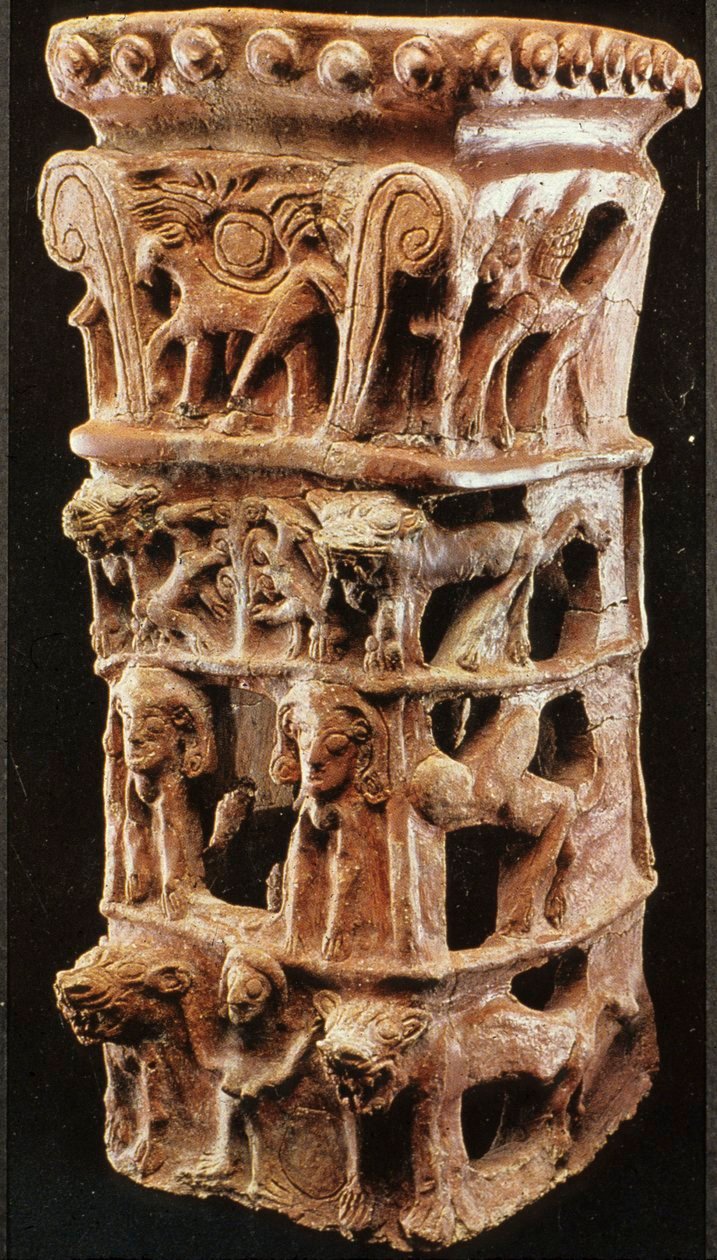
This four-tiered cult stand found at Tanaach is thought to represent Yahweh and Asherah, with each deity being depicted on alternating tiers. Photo: © The Israel Museum, Jerusalem/Israel Antiquities Authority (photograph by Avraham Hay).
This means that the text on the inscription found at Kuntillet ‘Ajrud can be a reference to a particular goddess, a class of goddess or a cult symbol used to represent the goddess.
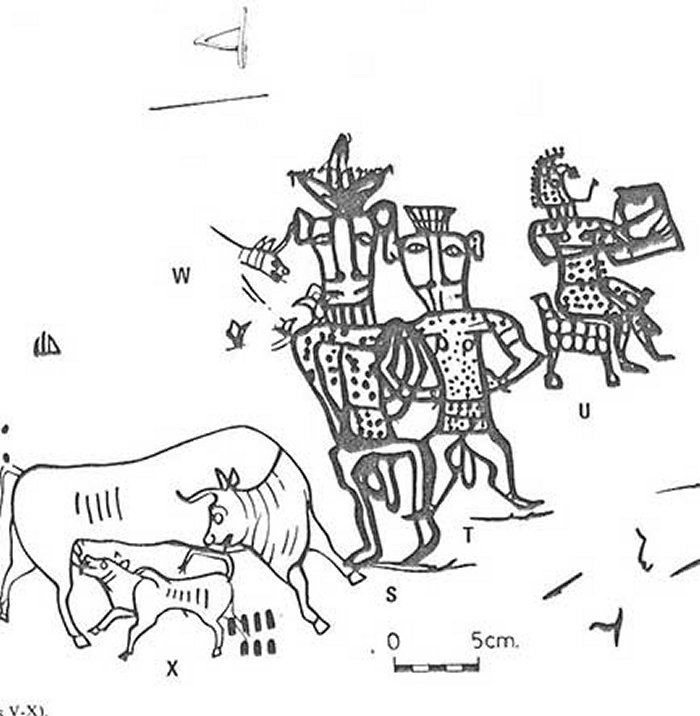
The problem with the inscription on the pithoi becomes even greater because of the drawing depicting two figures that scholars have identified as the Egyptian god Bes, which is, in fact, a collective name for a group of dwarf deities.
The two figures appear to be depictions of two males and not a drawing of God and his goddess wife.
It is believed that the image was drawn after the inscription was written, so the two may be completely unrelated.
The ancient inscription and the drawing are still subject of a lengthy scholarly discussion as to whether and how the inscription should be interpreted; that is, together with the drawings or independently.
Written by – Ellen Lloyd – MessageToEagle.com
Copyright © MessageToeagle.com All rights reserved. This material may not be published, broadcast, rewritten or redistributed in whole or part without the express written permission of MessageToeagle.com
Expand for referencesRelated Posts
-
 Londinium: Ancient Roman Outpost That Became Powerful City Of London
-
 How Strong Is The Link Between Sanskrit And European Languages?
-
 Ancient Temple Complex Dated To Nanzhao Kingdom Unearthed In Southwest China
-
 220 Million-Year-Old Dinosaur Footprint Found On Wales Beach By Girl
-
 Legendary Ynglings: Descendants Of The Norse Gods And Oldest Scandinavian King Dynasty
-
 Pre-Columbian Huge Underground Tombs Of Tierradentro, Colombia
-
 Indredible Mammoth Ivory Male Head From Dolni Vestonice, Czech Dated To 26,000 BC
-
 Mysterious Water Source Belonging To The Goddess Of The Cold Kingdom Of Evil Remains An Archaeological Puzzle
-
 Thousands Of Petroglyphs And Inscriptions In Wadi Rum, Jordan – 12,000 Years Of Human Occupation
-
 10 Mysterious Ancient Manuscripts With Hidden Secrets

