
Emilia Plater: National Female Hero Of Polish And Lithuanian People
A. Sutherland – MessageToEagle.com – There are many ancient heroes in almost all cultures around the world. Most of them are men but there are also female heroes still remembered for their principles, bravery and sacrifice they made for her country. One of them was for example, Queen Boudicca who revolted against Roman rule, but there are of course many more.
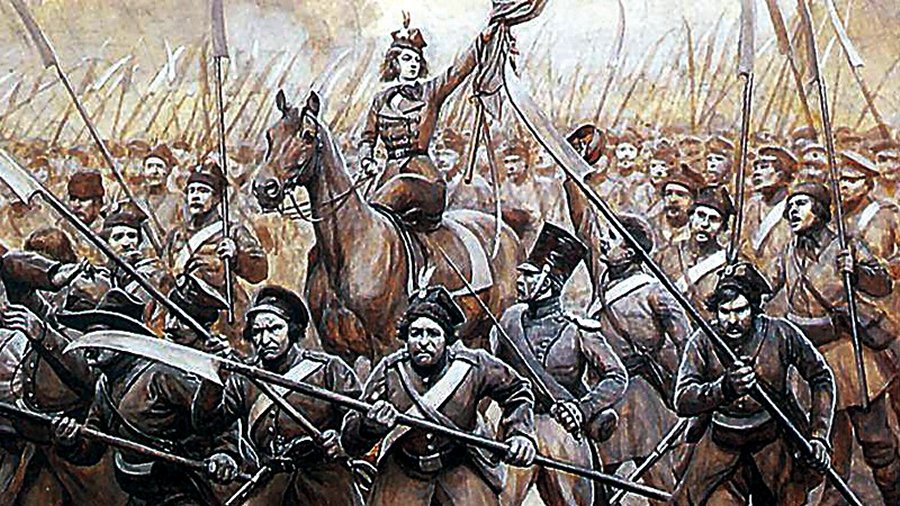
Today’s story is about Emilia Plater (1806 – 1831), a Polish revolutionary from the lands of the partitioned Polish–Lithuanian Commonwealth, once a single and very strong nation formed by Poland and Lithuania.
Countess Emilia Plater was a Polish noblewoman and patriot, born into Polish–Lithuanian Plater family in Vilnius, Lithuania.
From her family, including her father, Emilia received patriotic upbringing and education. When her parents divorced in 1815, she was only nine years old, so she spent much time with her cousins, who with certainty largely influenced her later life choices.
A young girl, Emilia learned to fence, shoot, ride a horse and became a skilled fencer; these were skills that were quite uncommon for early 19th-century girls from aristocratic families.
In 1831, news of the Warsaw Insurrection in February 1830, reached Wilnius. Polish patriots began preparations of their own rebellion, but Emilia was not allowed to participate in their meetings because of her gender.
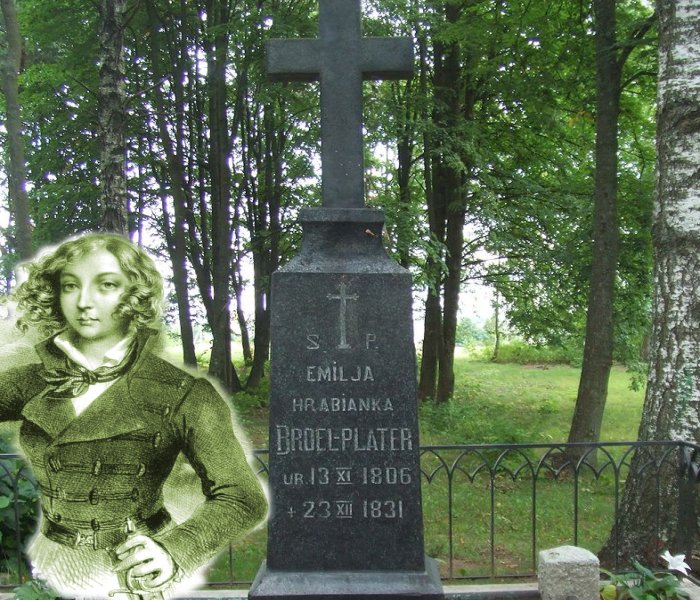
Like many other Lithuanians who supported the Poles on their march against the enemy in the east, Countess Emilia Plater also decided to fight in the November Uprising (1831).
At first, she cut her hair and prepared a uniform for herself so that she could join the revolution. No one could identify her as a young woman.
She raised a small regiment of roughly 280 infantry, 60 cavalry and several hundred peasants armed with war scythes and equipped her soldiers at her own expense.
On March 30, 1831, her army encountered a Russian horse patrol and only a few days later, on April 2, she forced an infantry division to retreat.
She led her regiment in some of the most vicious clashes with the enemy. She participated in several engagements. At some point, Plater was advised to stand down and return home but she definitely refused until her fatherland was fully liberated. Her decision was accepted and she was made a commanding officer of the 1st company of the Polish–Lithuanian 25th Infantry Regiment.
She was promoted to the rank of captain in the Polish insurgent forces, which was the highest rank awarded to a woman at that time.
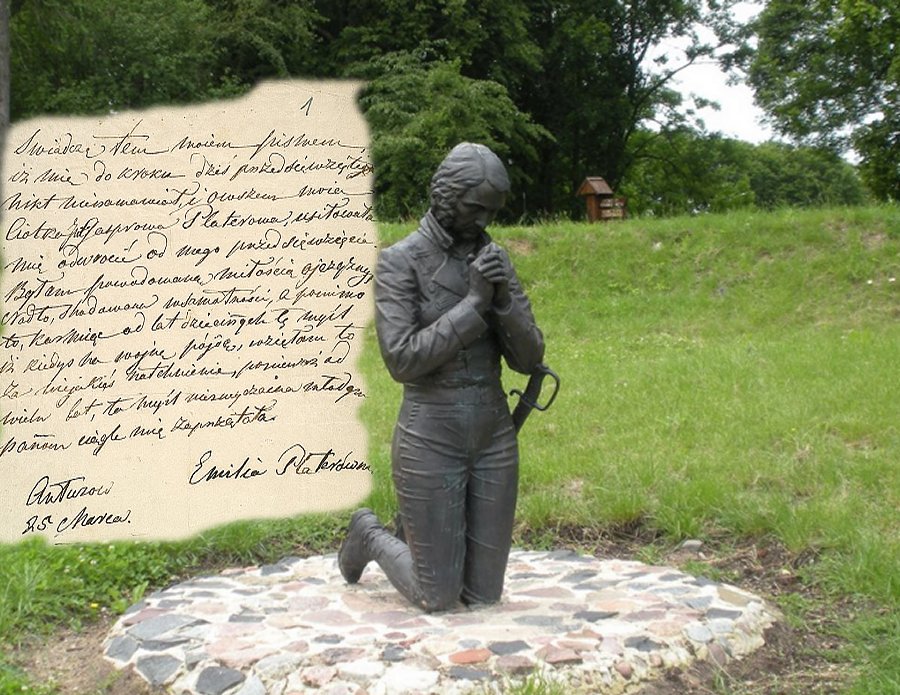
After the Polish units were defeated by the Russians, they decided to cross the border into Prussia and become interned there. Emilia Plater was against that decision and refused to follow orders. Instead, she decided to try to break through and reach Warsaw in order to continue the struggle.
Tragically, after separating from the main force, she became seriously ill and never recovered.
On December 23, 1831, the young Countess passed away, near the end of the Uprising.
After the defeat of the uprising, her estate was confiscated by the Russian authorities.
She sacrificed everything in her country’s cause.
“…The ancients would have raised altars to such a splendid example of female patriotism as being something divine; in the Middle Ages knights and men at arms would have flocked to her banners from the remotest corners of Christendom, as to a crusade..” points out Caleb Cushing in his “Review, Historical and Political, of the Late Revolution in France”.
In the 19th century, many women looked to Plater as a role model, in spite of her unfeminine traits of cross-dressing and her engagement in battle.
She inspired Polish literary and artistic works and was venerated by people Poland and Lithuania as a symbol of women fighting for the national cause. Plater is a Polish example of a woman who challenged a very important set of cultural taboos that actually existed at the time.
Her death was widely publicized shortly afterward by the Polish press, which contributed to her growing fame.
Plater became one of the symbols of the uprising. The symbol of the fighting girl became quite widespread both in Poland, Lithuania and abroad.
Her life has also been subject to studies from a feminist perspective, and many researchers point out the historical importance of Emilia Plater’s participation in the military conflict as a female going against the stereotype that only males can fight.
Written by – A. Sutherland MessageToEagle.com Senior Staff Writer
Copyright © MessageToEagle.com All rights reserved. This material may not be published, broadcast, rewritten or redistributed in whole or part without the express written permission of MessageToEagle.com
Expand for referencesReferences:
Cushing, Review, Historical and Political, of the Late Revolution in France
Related Posts
-
 Surprising Discovery – Replica In The Field Museum Is A 3,000-Year-Old Sword
-
 Etruscan Underground Pyramidal Structures Unearthed In Orvieto, Italy – Their Function Remains Unknown
-
 Winged Hussars: Facts And History About The Polish Warriors, Their Armor And Military Tactics
-
 Magnificent Reconstruction Of Scotland’s Largest Pictish Fort Burghead
-
 What Are The Most Common Misconceptions About Pirates?
-
 Stunning Ancient Lod Mosaic With Message Of Approaching Danger To The Ship At Sea
-
 Our Brain Is A Holographic Machine Existing In A Holographic Universe
-
 Ancient Tools Found In Maryland Re-Write The History Of First Humans In America
-
 Mysterious Mohenjo Daro Was Home To An Unknown Advanced Civilization Far Ahead Of Its Time
-
 First European Farmers’ Heights Did Not Meet Expectations

