
Stunning Mirrors Reveal Extraordinary Skills Of Iron Age Metalworkers
MessageToEagle.com – Mirror buried in Scottish bog and Iron Age bronze artefact from Devon embark on tour from British Museum.
A pair of hallowed Iron Age mirrors, the earliest of which is decorated in swirling Celtic art designs from 100 BC, have gone on display alongside the prized, 2,000-year-old Newark Torc at the National Civil War Centre.
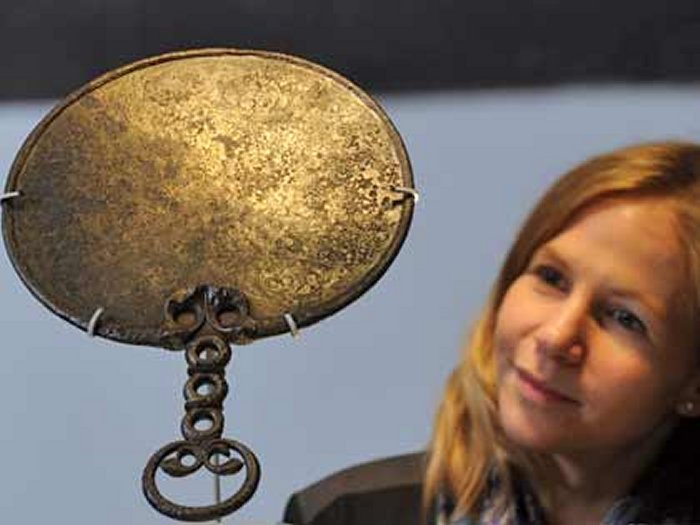
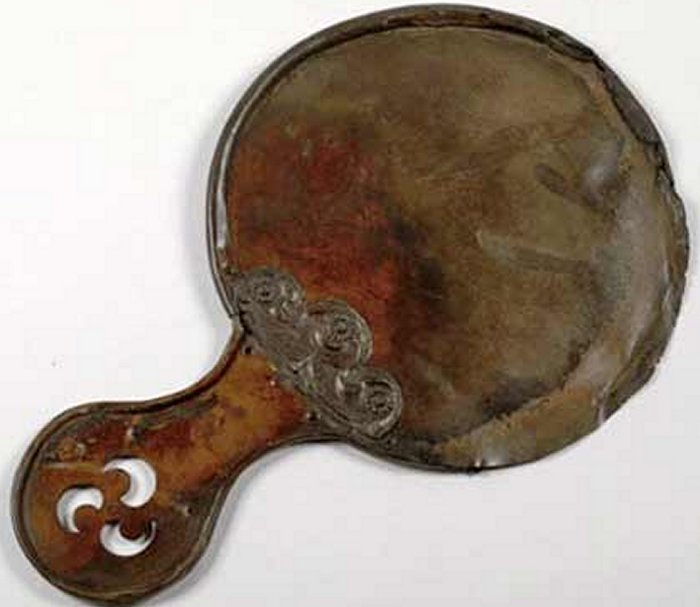
The Holcombe mirror, usually on display at the British Museum, was discovered during excavations at a late Iron Age settlement beneath a Roman villa in Devon. Its counterpart, from National Museums Scotland, emerged at Balmaclellan, in south-west Scotland, as part of a hoard of metalwork which could have been wrapped in cloth metals as an offering to the gods in a bog.
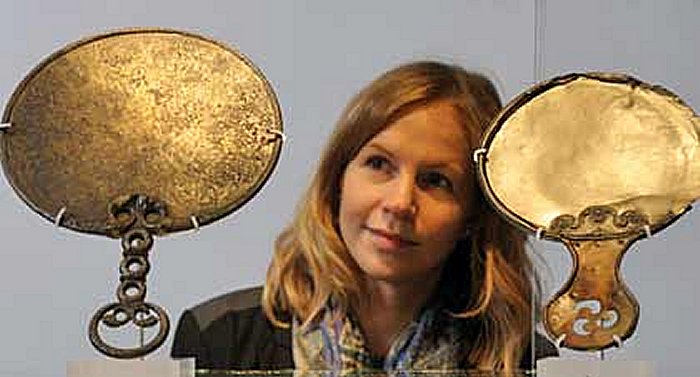
“These are fabulous objects which tell us a great deal about Iron Age culture and revealing they were capable of stunning workmanship,” says Glyn Hughes, the Team Leader for Collections at the centre, calling their temporary acquisitions “a major coup”.
“These are rare objects of international significance and we are delighted to be part of this prestigious tour.”
In 1967, Devon Archaeological Society heard that a Roman mosaic pavement had been found by a farmer near Uplyme in East Devon. The Society started archaeological excavations at the site in 1969 and discovered a Roman villa.
In 1970 a volunteer on the dig, Nicholas Riall, was excavating a pit found under the floor of one of the rooms in the villa. The pit belonged to a farm or settlement on the same spot the Villa was later built. In the bottom of the pit he found an Iron Age bronze mirror, which was placed there during the first century AD.
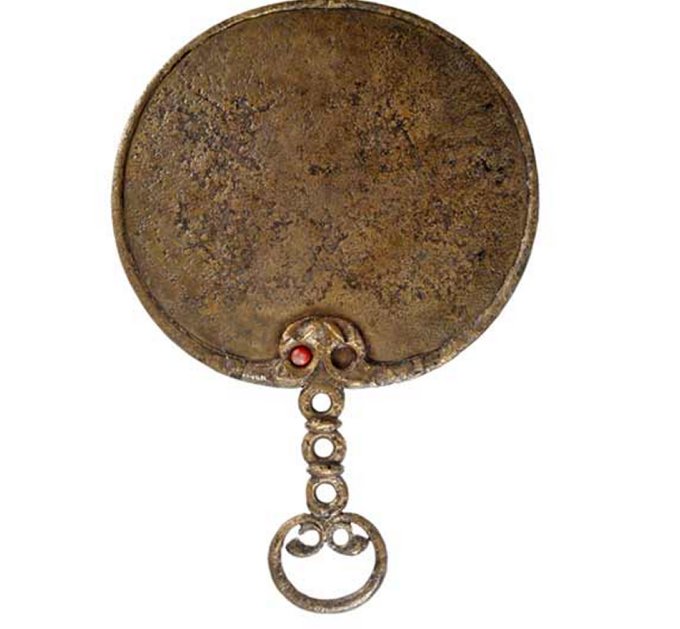
The mirror is made from bronze and is decorated with a symmetrical ‘Celtic’ or La Tene design. The decoration is on the back of the mirror, with the polished side where you saw your reflection on the other side.
The complicated design is now difficult to see because it was badly corroded by being buried for 2,000 years at the bottom of a pit. In fact, when the mirror was first found, no-one could see any decoration on the mirror plate at all. It was only after it was carefully cleaned by conservators at the British Museum that the design could be made out.
The plate of the mirror is only a millimetre thick and binding strip around the edge helped to protect it. The grip that holds the handle to the mirror is decorated with two counterpoised trumpet scrolls. British Museum curators say that when you look at the mirror with the handle at the top, the grip looks like the face of a smiling cat.
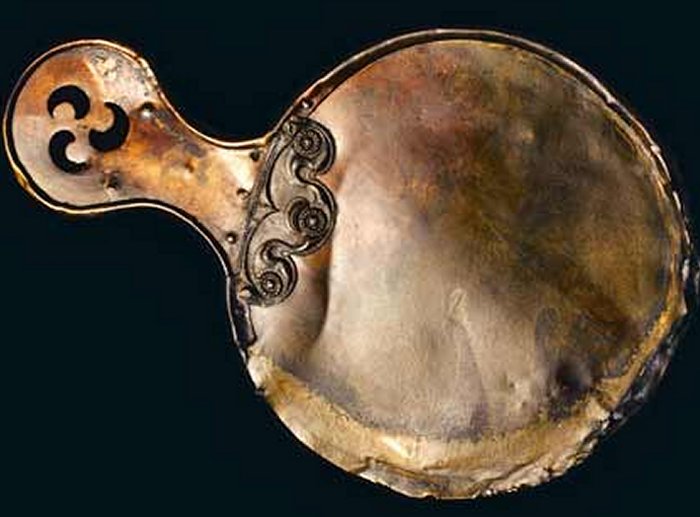
The bronze mirror was found in a hoard with sheet bronze mounts wrapped in four cloth parcels.
It was a valuable object, important for display as well as for grooming.
Details of the incised decoration can be paralleled on other native-made objects from England and lowland Scotland.
Bronze mirrors are found in both Roman and native sites, particularly in southern Britain. They would have been valuable and prestigious possessions.
MessageToEagle.com
source: Culture24
Related Posts
-
 First Unique View Inside The Denisova Cave And It’s Ancient History
-
 Salem Witch Trials: Exact Hangings’ Site Now Confirmed By Researchers
-
 Impressive Gaulcross Hoard Reveals Secrets Of Mysterious Picts
-
 Gruesome Story Of York’s Headless Romans – Who Were They And Where Did They Come From?
-
 Stunning 2,400-Year-Old Mask Of God Dionysus Unearthed In Ancient City Of Daskyleion
-
 Truth Behind Mysterious Ancient Metal Depositions Revealed By Scientists
-
 Ancient Mystery Of Leti – A Homo Naledi Child Of Darkness Discovered In The Rising Star Cave System
-
 Stunning 2000-Year-Old Roman Silver Dagger Used By Legendary Germanic Warriors Discovered By Teenager
-
 Large Roman Public Latrine With 60 Wooden Seats Discovered In Bet Shean, Israel
-
 Ancient DNA Has Traced Large-Scale Migrations Into Bronze Age Britain And The Emergence of The Celtic Language

