
The Eyes Of A Future Alien Astronomer – What Will They See?
MessageToEagle.com – Have you ever wondered what the Universe will look like for a future alien astronomer?
It will in fact be entirely different from what it is today.
One trillion years from now, an alien astronomer in our galaxy will have great difficulties figuring out how the universe began.
The Milky Way will have merged with the Andromeda galaxy to form the Milkomeda galaxy. Many of its stars, including our Sun, will have burned out.
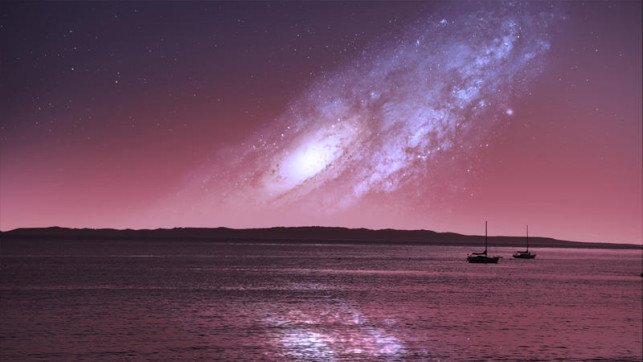
The universe’s ever-accelerating expansion will send all other galaxies rushing beyond our “cosmic horizon,” sending them forever out of view.
It was Edwin Hubble who made the first observations in support of the Big Bang model.
He showed that galaxies are rushing away from each other due to the universe’s expansion.
More recently, astronomers discovered a pervasive afterglow from the Big Bang, known as the cosmic microwave background, left over from the universe’s white-hot beginning.
The Universe’s expansion will cause the cosmic microwave background to fade out, stretching the wavelength of CMB photons to become longer than the visible universe.
Without the clues of the CMB and distant, receding galaxies, how will these far-future astronomers know the Big Bang happened?
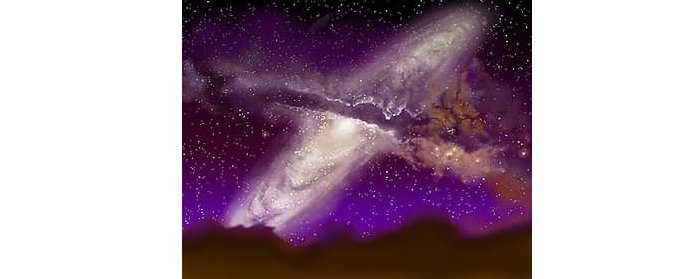
According to Harvard theorist Avi Loeb, clever astronomers in 1 trillion C.E. could still infer the Big Bang and today’s leading cosmological theory, known as “lambda-cold dark matter” or LCDM. They will have to use the most distant light source available to them – hypervelocity stars flung from the center of Milkomeda.
“We used to think that observational cosmology wouldn’t be feasible a trillion years from now,” said Loeb, who directs the Institute for Theory and Computation at the Harvard-Smithsonian Center for Astrophysics. “Now we know this won’t be the case. Hypervelocity stars will allow Milkomeda residents to learn about the cosmic expansion and reconstruct the past.”
See also:
Collision Course Established: Milky Way – Andromeda In Head-On Crash
A 46 Billion Pixel Image Of The Milky Way – Largest Ever Created
Gas Cloud Is Speeding Toward Collision With Milky Way – Could The Doom Be Averted?
About once every 100,000 years, a binary-star system wanders too close to the black hole at our galaxy’s center and gets ripped apart.
One star falls into the black hole while the other is flung outward at a speed greater than 1 million miles per hour – fast enough to be ejected from the galaxy entirely.
Finding these hypervelocity stars is more challenging than spotting a needle in a haystack, but future astronomers would have a good reason to hunt diligently.
Once they get far enough from Milkomeda’s gravitational pull, these stars will get accelerated by the universe’s expansion.
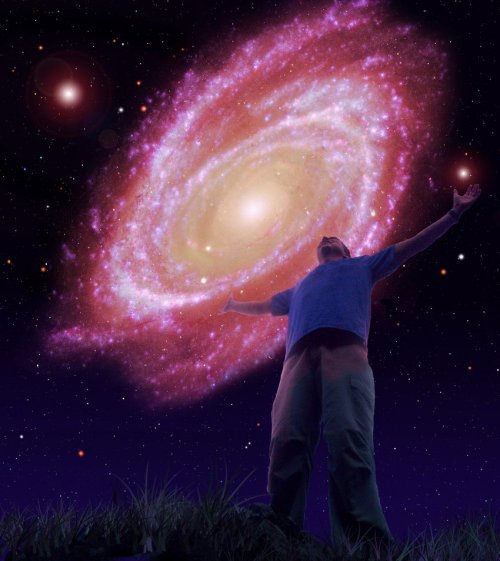
Astronomers could measure that acceleration with technologies more advanced than we have today. This would provide a different line of evidence for an expanding universe, similar to Hubble’s discovery but more difficult due to the very small effect being measured.
By studying stars within Milkomeda, they could infer when the galaxy formed. Combining that information with the hypervelocity star measurements, they could calculate the age of the universe and key cosmological parameters like the value of the cosmological constant (the lambda in LCDM).
“Astronomers of the future won’t have to take the Big Bang on faith. With careful measurements and clever analysis, they can find the subtle evidence outlining the history of the universe,” said Loeb.
So there is no doubt, that in a trillion years, when the universe is 100 times older than it is now, alien astronomers will have a very different view.
MessageToEagle.com
Related Posts
-
 Solar Wind Energy Source Discovered
-
 323 Galaxies Examined: AGN And Star Formation – It Appears Both Grow Together
-
 Blurry And Unexpected Surprise – Final Photo Sent By Rosetta’s Historic Mission
-
 Why Is Earth’s Water Older Than The Solar System? New Theory May Solve The Riddle
-
 Juno Spacecraft Arrives At Jupiter After Five-Year Long Journey From Earth
-
 New Record: Hottest Dying White Dwarf Identified At The Outskirts Of The Milky Way
-
 NASA’s TESS Exoplanet Mission Will Search For Alien Worlds And Those That Could Support Life
-
 A Closer Look At Magnetospheres: Planetary Shields
-
 Red Giant Star R Doradus: Stardust Study Resets How Life’s Atoms Spread
-
 When Is A Star Not A Star?

