
Ancient Inventions Of Firefighting Vehicles
A. Sutherland – MessageToEagle.com – The city of Alexandria, Egypt had the first primitive device that was used to spray water was used in the city of In the third century BC., the ancient inventor Ctesibius, a Greek inventor and mathematician, made a pump; it was later improved by Heron in the first century B.C.
The remains of such a pump have been found both in Italy and in England.
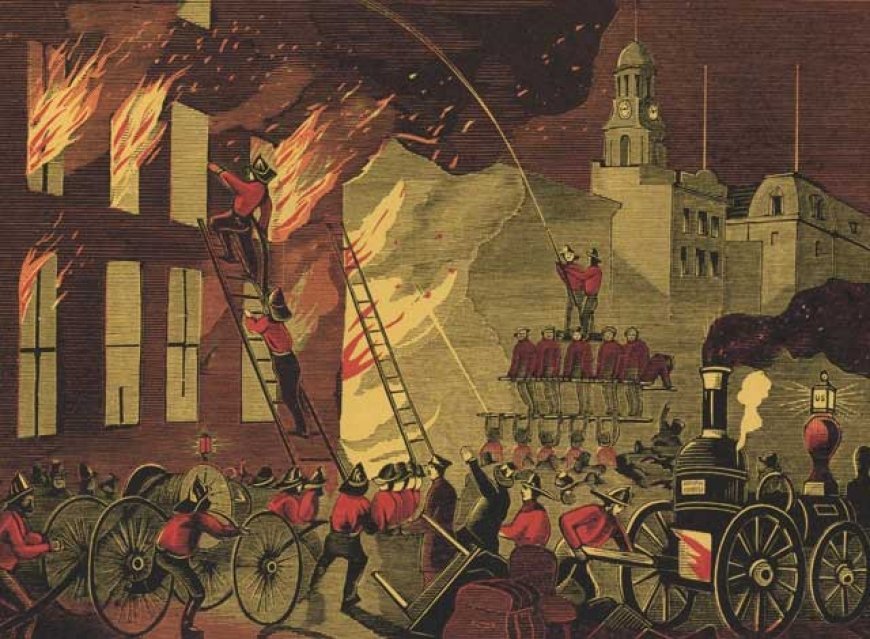
In Rome, was a group of slaves, carrying around these advanced (for the time) pumps. The slaves called the Familia Publica, represented “the fire department” in Rome.
The Roman fires were violent and widespread so the slaves were usually slow to respond, guaranteeing their own safety. In the year 6 AD, almost 30 percent of Rome burned in a very large series of fires. The Emperor Augustus decided that this was much too high a cost, so he assembled a team of public firefighters, named the Vigiles.
In America, it was required that each house had a bucket of water on the front stoop during fires at night. The buckets were intended for use by the initial bucket brigade that would supply the water at fires. In 1719, Philadelphia obtained a hand-pumped fire engine and another model of this engine was used in Boston several years earlier.
See also: First Odometer Was Invented By Vitruvius Around 15 B.C.
The earliest engines were small and were either carried by four men, or mounted on skids and dragged to a fire. As the engines grew larger they became horse-drawn and later self-propelled by steam engines.
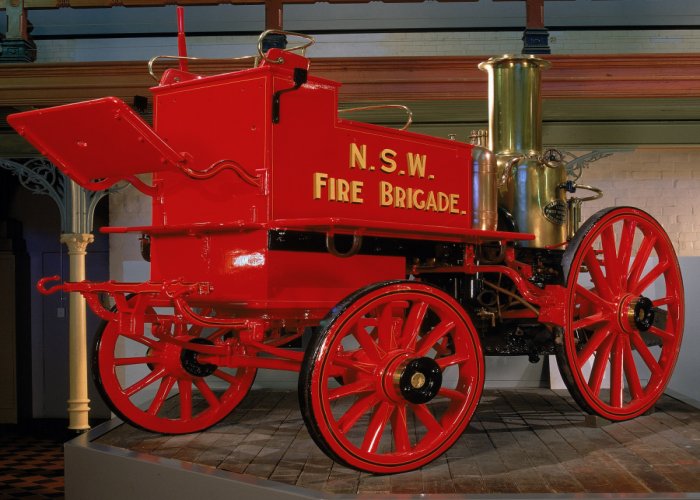
Two engines arrived to New York from London and on February 5, 1830, John Ericsson invented the first American steam-powered fire engine and in 1829, John Braithwaite (1797–1870), an English engineer invented the first steam fire engine.
In England in the sixteenth century, there were so-called “hand squirts.” These “squirts” were of very limited effectiveness for their capacity was only about two to four quarts of water, and usually, three men were required to operate them — two to hold the cylinder and one to work the plunger. Other people had to help in carrying to carry the water.
In the course of time, there was developed the “man-power” pumping engine with the rocking handle operated by two or more men, and mounted on a four-wheeled carriage drawn by men. This type of engine, which was improved upon from time to time, was used for many years. A few pieces of this type are still in existence.
Written by – A. Sutherland – MessageToEagle.com Senior Staff Writer
Copyright © MessageToeagle.com All rights reserved. This material may not be published, broadcast, rewritten or redistributed in whole or part without the express written permission of MessageToeagle.com
Expand for referencesRelated Posts
-
 Ancient Symbol Fleur-de-lis: It’s Meaning And History Explained
-
 Source Of Ancient Roman Silver Was The Iberian Peninsula
-
 Mysterious Inscription On Naxian-Style Sphinx From Dacia Deciphered
-
 How Was The Mysterious Menga Dolmen Built By Neolithic People? New Scientific Theory Presented
-
 Mysterious Bronze Age Face Carved In Rock And Rare Artifacts Found In Kazakhstan
-
 Why Was The Moretta Mask So Popular?
-
 Little Known Neanderthal Technology Examined – Turning Bones Into Tools
-
 Rudrama Devi – Warrior Queen Of The Kakatiya Dynasty And First Female Ruler Of South India
-
 Mystery Of The Pre-Adamic Didanum Race: Giants Who Were Ancestors Of The Nephilim and Rephaim
-
 Mysterious Emerald Tablet – Ancient Time-Capsule Of Forbidden Knowledge

