
Artifacts Discovered In Kerala Reveal Knowledge Of Advanced Metallurgical Technology
MessageToEagle.com – Several artifacts unearthed from a courtyard of a house at Vellakunnu, near Panoor, in Kannur district, north Kerala reveal knowledge of advanced metallurgical technology.
A burial urn along with three bowls and a metal artifact are expected to provide new insights into the megalithic times in the region.
The 90-cm-high urn has a ceramic lid with a diameter of 77 cm in the middle. “One remarkable peculiarity of this burial jar is the presence of a globular copper oblique bronze piece inside it,” says N.K. Ramesh, an anthropologist-cum-archaeologist, who is working as senior assistant at the Museum Project, Department of Cultural Heritage Studies, Thunchathu Ezhuthachan Malayalam University, Tirur.

See also:
Incredible Padmanabhaswamy Temple And Its Ancient Treasures Hidden In Vaults Guarded By Serpents‘
Incredible Ancient Metallurgical Wonders That Defy Explanation And Pose A Real Mystery Even Today
“Thogcha” – Thousand-Year-Old Tibetan Amulets And The Bon Culture
N.K. Ramesh points out it the first time a globular copper oblique bronze has been discovered in the megalithic context in the State. “Similar type of evidence has been discovered at Aathichanallur, an archaeological site in Tirunelveli district of Tamil Nadu. Probably, the relic might have been a sacred one, used for the worship by megalithic people,” he says.
The metal artefact has seven antenna-like projections on the top and morphology of the object testifies that it is a product of an advanced metallurgical technology. “Likewise, six terracotta hooks were found inside the neck of the urn, used either for hanging or suspending articles.
Bone features and river sand were also detected inside the urn. An excavation has been planned at the site,” he adds. A group of children playing in the courtyard of the house of Mangalassery Govindan spotted a hole and subsequently the jar was exposed.
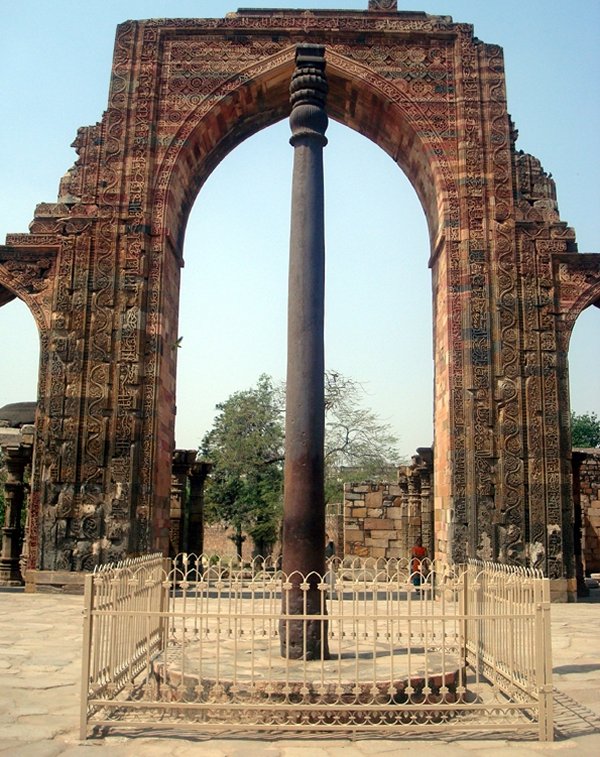
Metallurgy reached an advanced level in ancient India. Smelting of metals and derivation of alloys was done since 3000 BCE in ancient India. In the exchanges of goods between India, Egypt and Rome, metal trade from India was significant. Indian tools made from iron and steel were in great demand for war as well as agriculture.
Records show that the first supplies of the weapons that figure in the earliest recorded history of the people of Mediterranean came from India. The most outstanding examples of the capability and workmanship of Indian artisans include the famous Iron pillar at Delhi.
MessageToEagle.com
Related Posts
-
 Superfood Of Ancient Andeans Reconstructed – What Helped To Fuel The Tiwanaku Civilization 2,500 Years?
-
 Ancient “Mona Lisa Mosaic Of Kadirli” – Discovered
-
 Underwater Discovery: 4,000-Year-Old Shipwreck Belonging To Minoans Found In Turkey
-
 Neanderthal-Denisovan Ancestors Interbred With ‘Superarchaic’ Population 700,000 Years Ago
-
 King Tut’s Cosmic Dagger Was Not Made In Egypt – New Study Reveals
-
 Hero Stones Belonging to Pallava Era Found Near Tirupattur, India
-
 Unique 4,000-Year-Old Unknown Pagan God With Odd Expression Discovered By Fisherman
-
 Extraordinary 6,500-Year-Old “Noah” Skeleton Re-Discovered – A Survivor Of The Great Flood Hidden In Museum
-
 Can This Ancient Coin Solve The Mysterious Disappearance Of Pirate Henry Every?
-
 The ‘Cursed’ Ancient Roman Stones: Stolen Artifacts That Brought Misfortune Return To Museum

