
Why Do Chameleons Change Colors In Unusual Ways?
MessageToEagle.com – Chameleons change colors in unusual ways when they interact with other chameleons and it doesn’t happen without a reason.
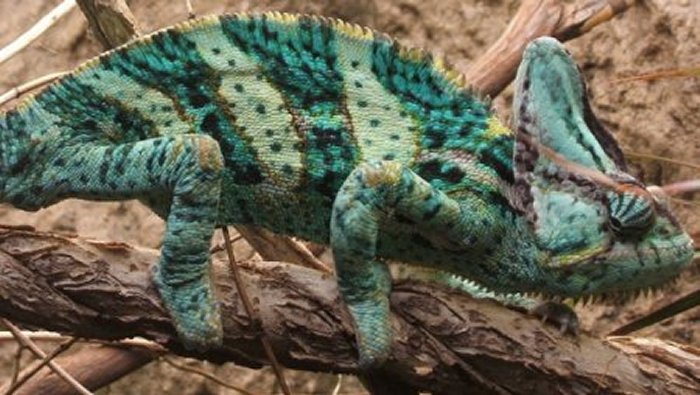
Native to Saudi Arabia and Yemen, veiled chameleons (Chameleon calyptratus) change colors when they convey different types of information during important social interactions.
When male chameleons challenge each other for territory or a female, their coloring becomes brighter and much more intense.
Males that display brighter stripes when they are aggressive are more likely to approach their opponent, and those that achieve brighter head colors are more likely to win fights.
Also, how quickly their heads change color is an important predictor of which chameleon will win a skirmish.
“We found that the stripes, which are most apparent when chameleons display their bodies laterally to their opponents, predict the likelihood that a chameleon will follow up with an actual approach,” said Russell Ligon, a doctoral candidate in ASU’s School of Life Sciences.
“In addition, head coloration — specifically brightness and speed of color change — predicted which was lizard was going to win.”
Researchers studied the distance, maximum brightness and speed of color change of 28 different patches across the chameleons’ bodies.
Chameleons typically have resting colors that range from brown to green, with hints of yellow, but each chameleon has unique markings.
See also:
Three-Eyed Tuatara Is The Closest Living Relative To The Dinosaurs
Ilha de Queimada Grande: The Snake Island Is World’s Deadliest Island
During a contest, the lizards show bright yellows, oranges, greens and turquoises. Interestingly, when the chameleons showed-off their stripes from a distance and followed that display with a “head-on” approach before combat, the important color signals on the striped parts of the body and head were accentuated.
“By using bright color signals and drastically changing their physical appearance, the chameleons’ bodies become almost like a billboard — the winner of a fight is often decided before they actually make physical contact,” Ligon said.
“The winner is the one that causes its opponent to retreat. While sometimes they do engage in physical combat, these contests are very short — five to 15 seconds. More often than not, their color displays end the contest before they even get started.”
MessageToEagle.com
Related Posts
-
 Pelagornis Sandersi: World’s Largest Bird Had A Wingspan Of 24 Feet!
-
 Monster Black Holes 10 Billion Times Greater Than The Sun
-
 How Long Does Human Brain Develop?
-
 Largest Salamander Discovered in North America
-
 Giant Flightless Bird With A Head Size Of A Horse’s Lived In The Arctic
-
 Dinosaurs Took Over Amid Ice, Not Warmth – A New Study
-
 Spooky, Stealthy Night Hunters: Revealing The Wonderful Otherworld Of Owls
-
 DNA Study: Almost All The Microbes Inside Our Bodies Are Unknown To Science – Stanford Study Says
-
 Origin Of The Genetic Code – Study
-
 What Crocodile DNA Reveals About The Ice Age

