
Moths Are Masters Of Disguise
MessageToEagle.com – Did you know that moths are masters of disguise? The moths’ camouflage is highly effective. Moths are masters at hiding and they are able to find places where it’s really hard to see them.
Evolution has equipped them in the right look, the colors of their wings are a result of natural selection to match the patterns of natural substrates, such as a tree bark or leaves, on which the moths rest.
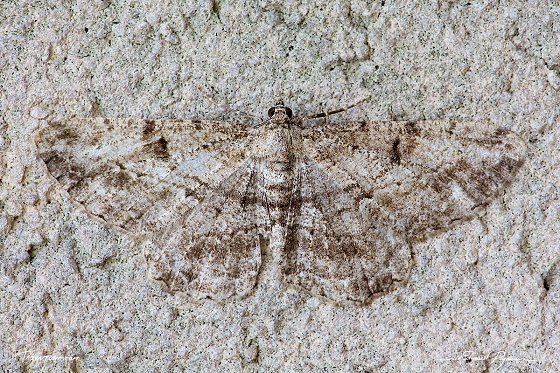
Despite years of research, scientists have still not been able to determine whether moths behave in a way to increase their invisibility.
Polish-Korean team of scientists at Seoul National University in South Korea and the Polish Academy of Sciences, have recently found out that moths walk on the tree bark until they settle down to rest.

They seem to actively search for a place that perfectly fits their “pattern”and a body position that makes them practically invisible.
Instead of placing moth specimens on a tree bark in various positions to see how body orientation of moths make them invisible to birds, which has been done by several researchers, “we let the moths to do the job for us” says Changku Kang, the PhD student who conducted the experiment.
The researchers let inchworm moths of two species (Jankowskia fuscaria and Hypomycis roboraria) land on tree bark and freely choose the final resting spot.
Many moths did not remain at the spot of landing. They walked around looking for that one absolutely perfect spot that may make them invisible to predators.

To determine whether this final spot indeed made the moth really invisible, the researchers photographed each moth at its landing spot (initial spot) and at the final spot at which the moth decided to rest.
To test how good the moths were at concealing themselves from predators – or at least beady-eyed humans – the researchers compared photos of the moths taken when they first landed with photos taken when they had settled.

Next, the researchers asked volunteers to recognize the moths in the photos, which was not any easy task. It was simply very difficult to find the moths at their final spots than the same moths at their initial landing spots.


Amazingly, this was even true for the species (Hypomecis roboraria) that only changed its resting spot on the tree bark without changing its body orientation.
See also: Tiktaalik Roseae: A 375-Million-Year-Old Fish Had Fins For Walking
Therefore, the researchers concluded, that moths seems to actively choose the spot that makes them invisible to predators.
However, the question: How do these fascinating insects know how to become invisible? That question is still unanswered.
First version of this article was originally published on August 6, 2012
© MessageToEagle.com
Related Posts
-
 Lake Baikal Is The Deepest And Oldest Lake In The World
-
 Music Can Improve Memory
-
 Zombie Stars – Unusual Space Objects That Refuse To Die Despite Multiple Powerful Explosions
-
 Taking Photographs Of Past Events: Still Science Fiction Or Reality Soon?
-
 What Is The Kármán Line?
-
 People Can Float In The Dead Sea
-
 What Colors Can Newborn Babies See?
-
 Enigmatic Rare And Very Hot Wolf-Rayet Stars – Still Fascinating Celestial Objects
-
 Rotating Black Holes May Serve As Gentle Portals For Hyperspace Travel
-
 Why Are The Billions Of Years Old Moeraki Boulders So Perfectly Round?

