
Which Is The Dominant Factor For Species Occurrence And Abundance: The Climate Or Habitat-Related Variables?
Eddie Gonzales Jr. – MessageToEagle.com – Land-use decisions greatly impact the occurrence and location of species communities.
Species are lost when their habitats change.
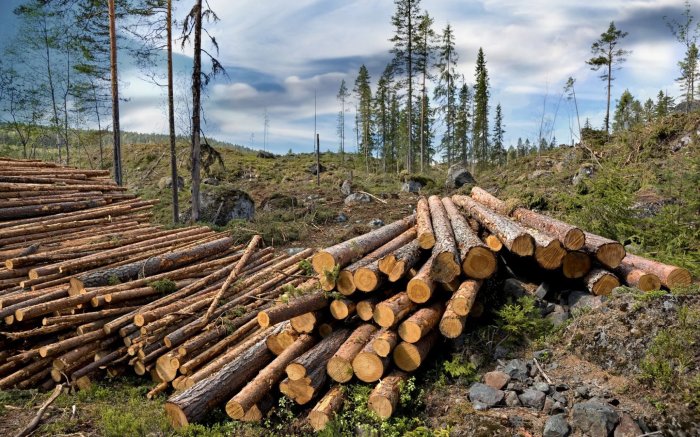
Image source
Researchers at the University of Helsinki wanted to understand which factor dominates species occurrence and abundance: climate or habitat-related variables, such as natural state and the share of land shaped by human activity. Solutions to mitigate biodiversity loss depend on the answer.
Contrary to the researchers’ expectations, habitat composition better explains the occurrence and abundance of most animal groups than climate. This conclusion highlights the importance of land-use planning in safeguarding biodiversity.
“The habitat proved to be of special importance to butterflies, birds, and small mammals. As for large mammals and moths, the relative importance of the habitat and climate were equal,” explains Emy Guilbault, the article’s lead author.
The study examined 503 terrestrial animal species and changes in their occurrence over 20 years. The data covered all of Finland and its climatic zones. Analyzing more than three million observations required advanced statistical methods.
Climate accounts for differences between north and south, while habitats explain local variation
Climate best explains the observed variation in species communities from year to year and across broader geographical areas, such as Southern and Northern Finland. Tackling climate change is essential to retain the distinctive characteristics of northern and southern fauna.
In contrast, habitat importance increases when biodiversity variation is examined locally and regionally. Forested areas support different species communities than agricultural environments or wetlands, and species are lost when their habitats change. Consequently, land-use decisions strongly affect where species communities occur.
Species-specific characteristics determine the dominant factor
The study also examined how species functional traits shape the results. For example, body size, reproductive cycle rate, and degree of specialization affect how strongly climate and habitat determine species occurrence and abundance.
In almost all taxonomic groups, species with slow reproductive cycles were more sensitive to climatic conditions than species with faster ones. Similarly, small mammals that preferred a specific habitat or food source depended on climate, while habitat mattered more for larger, less specialized mammalian species.
For birds, butterflies and moths, body size or degree of specialization had no effect on which – the climate or habitat quality – was more dominant.
Biodiversity decline cannot be explained by climate change only
The researchers believe that biodiversity loss in Finland cannot be attributed to climate change alone.
“In many cases, land use can have an even more decisive impact on species, especially locally and regionally. At the same time, climate change and habitats cannot be completely separated from each other, because it is together that they will determine the state of our species communities in the coming decades,” says Guilbault.
Climate and habitats have significant combined effects on biodiversity, as species are forced to adapt to both a changing climate and habitat degradation.
“To preserve biodiversity, we should put greater effort into the protection and restoration of the remaining habitats. Maintaining habitat diversity also helps species cope with climate change. Moreover, conservation efforts should take species characteristics, regional differences and temporal variation into account”, says Professor Jarno Vanhatalo.
The researchers take comfort in knowing that their results show that land use and habitat protection can be addressed more effectively locally than tackling climate change globally. We have means to protect Finland’s species, and the most effective of these are in our own hands.
Written by Eddie Gonzales Jr. – MessageToEagle.com Staff Writer
Related Posts
-
 Discovery Of New Ice May Change Understanding Of Water
-
 Strange New Species Of Duck-Billed Dinosaur From Big Bend National Park, Texas – Identified
-
 Never Before Seen Ancient Life-Form Discovered In The Naica Crystal Cave Changes Our Understanding Of Biology
-
 Secrets Behind The Cuttlefish’s 3D ‘Invisibility Cloak’
-
 Australian And New Zealand Little Blue Penguins Are Different Species
-
 Vorombe Titan: World’s Largest Bird Was A Giant Elephant Bird
-
 Plants Are Intelligent And Decide When To Grow And Not
-
 Hummingbirds See Colors Humans Can Only Imagine
-
 Leonardo da Vinci’s ‘Rule Of Trees’ – Disproved
-
 New Predatory Flatworm Discovered In Southeastern United States

