
3D “Entanglement”: How Cephalopods Evolved Complex Brains
Eddie Gonzales Jr. – MessageToEagle.com – Octopuses, squid and cuttlefish, collectively known as coleoid cephalopods, have evolved exceptionally large and elaborately structured nervous systems capable of complex behaviours such as problem-solving and rapid camouflage.
A new study by scientists at The University of Vienna suggests that the origins of this complexity may lie not just in the genes themselves, but in how the genome is organised in 3D.
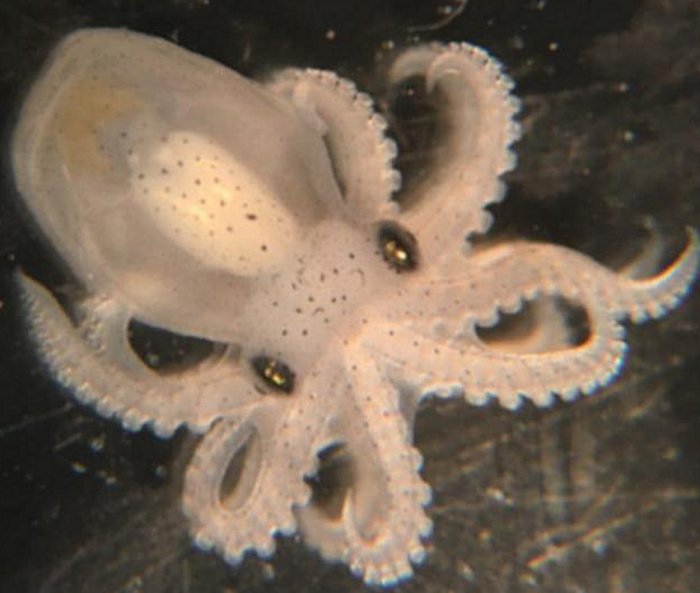
Californian two-spot octopus (Octopus bimaculoides). Embryo at the final stage before hatching. The species is named after the two prominent blue eyespots that can help deter predators.Image credit: Natalie Grace Schulz
The researchers found that ancient, extensive reorganisation of the genome altered how DNA is arranged inside the cell. These shifts brought previously distant regions of DNA into contact, changing the way genes are regulated. Understanding this process could change how we think about how new traits emerge during evolution. The findings are currently published in the renowned journal Nature Communications.
The team studied the 3D structure of the genome across octopus, squid and cuttlefish, combining data on DNA structure with gene activity. “The genome isn’t just a sequence of genes. It’s folded into a complex three-dimensional structure,” said lead author Dr Thea Rogers. “Understanding how that structure evolves is becoming increasingly important for understanding how new forms of biological complexity arise.”
“Regulatory entanglement” as a consequence of genome reorganisation
In cephalopods, a large-scale burst of genome reorganisation, which occurred hundreds of millions of years ago, dramatically reshuffled the genome and brought previously distant regions of chromosomes into close proximity.
The researchers found that when regions of DNA are brought into contact, they can begin to interact and influence each other’s activity. Over time, these interactions can become embedded, forming increasingly interconnected regulatory networks.
“Regulatory entanglement” balances innovation and stability in genome evolution
This process, described by the researchers as “regulatory entanglement”, may allow genomes to generate new patterns of gene expression while maintaining essential functions.
Not all aspects of genome structure appear to respond to genome reorganisation in the same way. The researchers found that large structural units of the genome, known as chromatin domains, remained largely stable over evolutionary time.
In contrast, finer-scale connections known as chromatin loops were far more dynamic. These loops bring distant regions of DNA into contact. They varied widely across species, tissues and developmental stages, and were often found near genes involved in key cephalopod traits, including those linked to the nervous system. This suggests that these more flexible regions may be particularly affected by large-scale changes in DNA organisation.
3D structure of DNA shapes evolutionary processes actively
Together, these findings challenge the idea that genome architecture is a passive consequence of evolution. Instead, they suggest that the 3D organisation of DNA actively shapes how evolution unfolds. In cephalopods, this may have played a key role in the emergence of their unusually complex nervous systems.
Written by Eddie Gonzales Jr. – MessageToEagle.com Staff Writer
Related Posts
-
 Dinosaurs Probably Ate Much More Fruit And Seeds Than We Used To Think
-
 Last Surviving Flightless Bird Species Rose From The Dead
-
 Millions Of Bizarre Luminous Creatures Invade The West Coast In U.S And No-One Knows Why
-
 Unknown And Fascinating Species Discovered On Deep-Sea Expedition
-
 Genetic Links Between Traits Are Often Overstated – UCLA Study
-
 Ancient Legendary Giant Squid – One Of The Most Extraordinary Animals Living On Our Planet
-
 Your Pet Does Have A Facial Expression And You Can Learn How To Read It
-
 American Chestnut Trees, Their Breeding In The Changing Climate
-
 A New Duck-Billed Dinosaur, ‘Kamuysaurus japonicus’ – Identified
-
 Flying Reptile With A Wingspan Of Up To 10 Meters Dominated North America’s Skies 75 Million Years Ago

