
Earth’s Vital Signs Flashing Red: Scientists Warn of Climate Instability Amid Rapid Tech Growth
Eddie Gonzales Jr. – MessageToEagle.com – Earth’s climate system is rapidly destabilizing, new research shows. The authors emphasize that climate change has graduated from a future warning to an active diagnosis, demanding sweeping socioeconomic transformations alongside technological progress.
Atmospheric Records and Accelerating Warming
According to the analysis, human activities continue to push the biosphere toward irreversible tipping points as greenhouse gas accumulation accelerates.
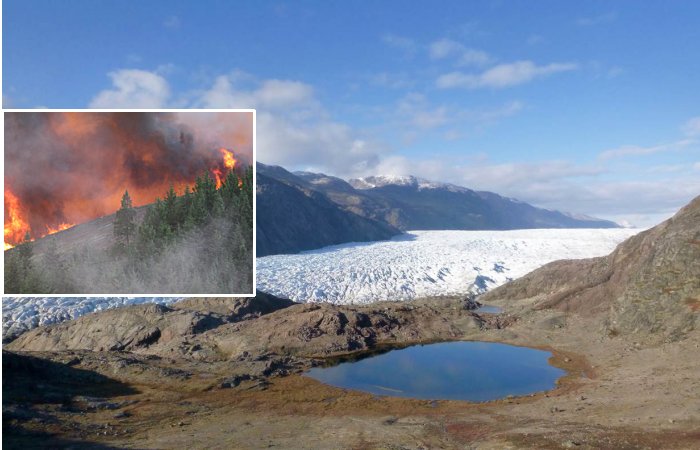
Image source
Atmospheric carbon dioxide concentrations have climbed to 428 parts per million, representing a 50% increase over pre-industrial baselines and the highest level observed in two million years. This atmospheric insulation is causing global warming to double its previous pace, jumping from 0.19°C per decade between 1970 and 2010 to an estimated 0.36°C per decade in recent years. This thermal surge was heavily felt in July 2026, which registered as the hottest month ever recorded for both the contiguous United States and global ocean surfaces.
Melting Ice and Shrinking Forest Cover
The severe fallout from these record temperatures is visibly altering the planet’s cryosphere and ecosystems. Both Greenland’s ice mass and overall global glacier thickness have reached historic lows, with Greenland’s summer meltwater volume surging sixfold due to intense melting episodes. On land, climate-driven wildfires wiped out 10.8 million hectares of global tree cover in 2025, marking the third-highest ecological loss footprint on record.
The Age of Electricity Meets Fossil Fuel Resistance
The study identifies a stark paradox between rapid clean energy adoption and rising fossil fuel usage. On one hand, alternative energy generation is booming, with wind and solar consumption jumping by roughly 18%. Low-carbon infrastructure now generates approximately 43% of the world’s electricity—prompting researchers to note the emergence of an “Age of Electricity”—while deforestation rates within the Brazilian Amazon have simultaneously declined for four consecutive years. Conversely, total fossil fuel consumption still managed to rise by 0.9% in 2025, pushing global energy-related carbon emissions past 41 gigatonnes for the first time due to record highs in oil, gas, and coal deployment.
Interconnected Threats and the Need for Systemic Change
The coalition emphasizes that climate change no longer operates in isolation, but dynamically compounds other global stressors, including food insecurity, biodiversity depletion, freshwater scarcity, and geopolitical conflict. These burdens fall disproportionately on vulnerable communities in small island nations and the Global South, who bear the brunt of severe climate anomalies despite contributing the least to historic emissions footprints.
Looking ahead, a powerful El Niño system projected for later this year threatens to escalate temperatures further, placing 2026 on target to become one of the warmest periods ever documented.
Ultimately, the authors conclude that simply lowering greenhouse emissions is no longer a standalone solution. Stabilizing the biosphere requires structural transformations across economic sectors, systemic adaptation initiatives—like urban cooling and wetland rehabilitation—and unified policy models that address both humanitarian and ecological systems simultaneously.
Written by Eddie Gonzales Jr. – MessageToEagle.com Staff Writer
Related Posts
-
 What Influences Sea Ice Motion In The Arctic – New Study
-
 Desert Dust In Europe Is Increasing
-
 Strange Ancient Underwater Yellow Brick Road Discovered Of The Hawaiian Islands
-
 Giant Black Wandering Bog Suddenly Appears In North Long Lake, Minnesota
-
 Evidence Of A Cosmic Impact That Destroyed 12,800-Year-Old Settlement
-
 The Ice In Antarctica Has Melted Before – Says Study
-
 Slow Motion: Scientists Investigate Tectonic Plate Boundary Earthquake Behavior
-
 Why Is Earth’s North Magnetic Pole Moving Toward Russia?
-
 Global Tsunamis Driven By Underwater Volcanic Eruptions
-
 Near Total Loss Of Historical Lands Leaves Indigenous Nations In The US More Vulnerable To Climate Change

