
Bacteria Are Mathematicians! They Use Sophisticated ‘Game Theory’, ‘Prisoner’s Dilemma,’ And ‘Chemical Twitter’ To Make Decisions
MessageToEagle.com – To most of us, bacteria are simple living organisms, and it may come as surprise to learn that these organisms are capable of sophisticated thinking in relation to its own being. Just likes bees, bacteria are also capable of mathematical reasoning.
For example, when faced with life-or-death situations, bacteria use an extremely sophisticated version of “game theory” to consider their options and decide upon the best course of action.
Bacteria can chemically communicate with each other about factors like colony density and the activity of neighboring cells, allowing complex decision making to adapt to environmental situations.
“Using this form of cell-to-cell communication, colonies of billions or trillions of bacteria can literally reach a consensus on actions that impact people. Bacteria that previously existed harmlessly on the skin, for instance, may exchange chemical signals and reach a consensus that their numbers are large enough to start an infection.
Likewise, bacteria may decide to band together into communities called biofilms that make numerous chronic diseases difficult to treat – urinary tract infections, for instance, cystic fibrosis and endocarditis, “said José Onuchic from the Rice University in Houston.
There are many reasons why scientists consider it is vital to understand this kind of communication among the cells.
“Understanding how cells make decisions could enable scientists to control those decisions.
It would open the door to developing better drugs that have fewer side effects.
For example, once we get a handle on this process, we might block the specific chemical messages that signal a tumor to grow, developing a medicine that wouldn’t affect other body processes, reducing or eliminating side effects, “Onuchic said.
“Game theory” is a mathematical theory that deals with strategies for maximizing gains and minimizing losses within prescribed constraints, as the rules of a card game. It is widely applied in the solution of various decision-making problems, as those of military strategy and business policy.
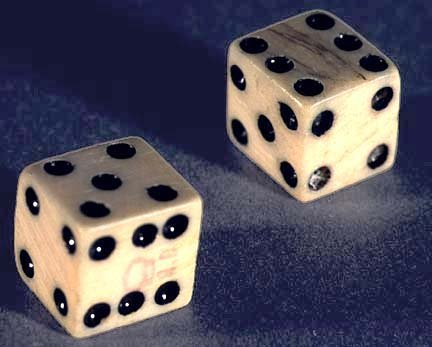
Onuchic studied the common soil bacterium Bacillus subtilis in different stressful environments, including drought, radiation, and overcrowding.
B. subtilis engages in quorum sensing, with individual microbes releasing chemical compounds that enable it to check out how their neighbors are responding to the unfavorable environment.
Members of a colony of B. subtilis may decide to respond to the stressful environment in one of two ways.
They may make a decision to turn themselves into “spores,” a hibernation-like existence. Alternatively, they may opt for transformation into a state called “competency.”
In sporulation, bacteria dump half of their DNA into the environment and encase themselves in a thick, armor-like shell that enables the microbe to endure harsh conditions for decades on end. Forming a spore involves more than 500 genes and can take about 10 hours to complete.
When conditions improve, the spore turns into a regular bacterium again. Most bacteria, when faced with bad conditions, become spores. But a few – about 1-2 percent in the wild – “see” that their neighbors are becoming spores and decide to become competent. In doing so, they take up some of their neighbors’ discarded DNA in a last-ditch effort to adapt to the harsh environment.

“Sporulation is a drastic, traumatic process,” said Onuchic. “The advantage of competency is that the cell might be able to adapt and live normally without undergoing that drastic upheaval. But competency is risky – if conditions don’t improve fast enough, the competent cell could die before having a chance to become a spore. Also, the spores could decide to break out of hibernation and compete for resources. It’s a complicated decision.”
Onuchic’s research suggests that the way cells make decisions is consistent with game theory, a concept used in math to analyze conflict and cooperation and made famous by the book and 2001 movie A Beautiful Mind, based on the life of John Nash, a Nobel Laureate in Economics.
Sporulation is like cooperating or confessing in the so-called “Prisoner’s Dilemma,” a famous example of game theory, Onuchic said. Becoming competent, however, is a selfish decision that exploits the misfortunes of others.
In the human version of the Prisoner’s Dilemma, a player’s prison sentence depends not only on their own decision whether to confess, but also on another prisoner’s decision. In the game, two prisoners are separated and told that if one confesses, the confessor goes free, and the other prisoner gets a one-year sentence. If both confess, each serves three months. If both stay silent, then each serves one month. The trick is to see whether a player will be selfish by confessing for a chance at earning a “get-out-of-jail-free” pass while subjecting their partner to a long sentence.
“Just as in the classic Prisoner’s Dilemma game, the bacteria have to weigh the pros and cons of their decisions,” said Onuchic.

“The bacteria make a decision based not only on what it knows about its own stress and environment, but it also has to think about what the other bacteria might do. So this is like the Prisoner’s Dilemma being played with 1 trillion cells in a colony instead of just two people.”
“They decide collectively by talking to their neighbors by exchanging peptides. This is what we named chemical Twitter, “Onuchic said.
MessageToEagle.com
Related Posts
-
 What Did The First Dinosaurs Eat?
-
 Huge ‘Colossus Of Rhodes’ Statue Will Be Rebuilt As A Beacon That Can Be Seen For 34 Miles
-
 ‘Artificial Leaf’ That Produces Clean Synthetic Fuel – Developed
-
 Did Neanderthals Practice Religion?
-
 Walking Tropical Sharks Discovered In Australia And New Guinea
-
 Water Is Highly Unique – It Has Multiple Liquid States – New Study
-
 Giant Human-Sized Penguins Ruled The World After Dinosaurs Died Out
-
 Unexplained Mystical Structure: Egyptian ‘Ankh Cross’ Temple Built By The Aztecs?
-
 Stunning Discovery Of Ancient Underwater Road In The Adriatic Sea – Traces Of A Lost Civilization?
-
 Mysterious Alien World Hidden Beneath Antarctic Subglacial Lakes – Discovered

