
Black Plants Could Exist On Alien Worlds With Two Suns
Ellen Lloyd – MessageToEagle.com – We have previously seen what auroras might like on alien worlds.
This time we examine how life on planets in binary star systems can evolve.
Earth-like planets with two or three suns would have multiple sources of light that could be used for photosynthesis. This means plants on such worlds could be dark, even completely black.
Photosynthesis, converting sunlight into energy is the basis for the majority of life on Earth.
It is the energy source for plants and, hence, animals higher up the food chain. With multiple light sources, life may have adapted to use all suns, or different forms may develop that choose to use one specific sun. This may be the more likely option for planets on which parts of the surface are illuminated by only one sun for long periods of time.
“If a planet were found in a system with two or more stars, there would potentially be multiple sources of energy available to drive photosynthesis. The temperature of a star determines its color and, hence, the color of light used for photosynthesis.
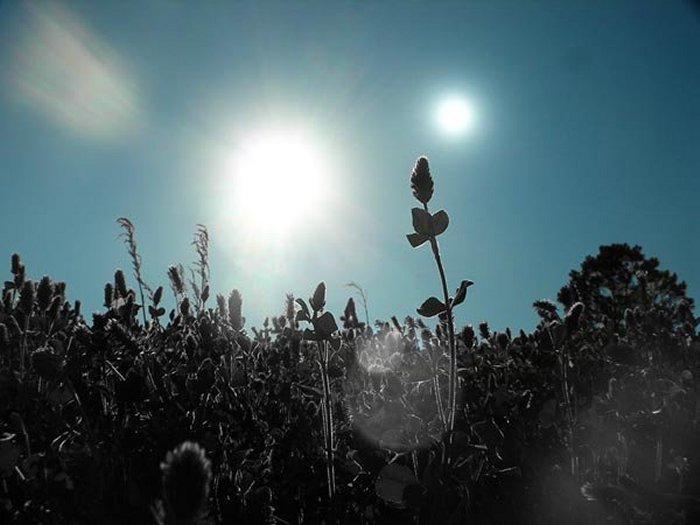
Depending on the colors of their star-light, plants would evolve very differently,” said O’Malley-James of the University of St. Andrews has studied what plants might be like on an Earth-like planet with two or three suns.
O’Malley-James is working on a PhD, supervised by Dr. Jane Greaves at the University of St. Andrews, Prof. John Raven of the University of Dundee and Prof. Charles Cockell of The Open University, to assess the potential for photosynthetic life in multi-star systems with different combinations of Sun-like stars and red dwarfs.
Sun-like stars are known to host exoplanets and red dwarfs are the most common type of star in our Galaxy, often found in multi-star systems, and old and stable enough for life to have evolved.
See also:
- Auroras On Alien Worlds Can Be Stunningly Beautiful
- Plasma Aliens Could Live Inside “Black Clouds”- Extraterrestrial Life Can Be Stranger Than We Even Dare To Imagine
- Advanced Extraterrestrial Civilizations – Their Technology And Capabilities: What Can We Expect?
Over 25% of Sun-like stars and 50% of red dwarfs are found in multi-star systems. In the team’s simulations, the Earth-like planets either orbit two stars close together or orbit one of two widely separated stars. The team has also looked at combinations of these scenarios, with two close stars and one more distant star.
“Our simulations suggest that planets in multi-star systems may host exotic forms of the more familiar plants we see on Earth.
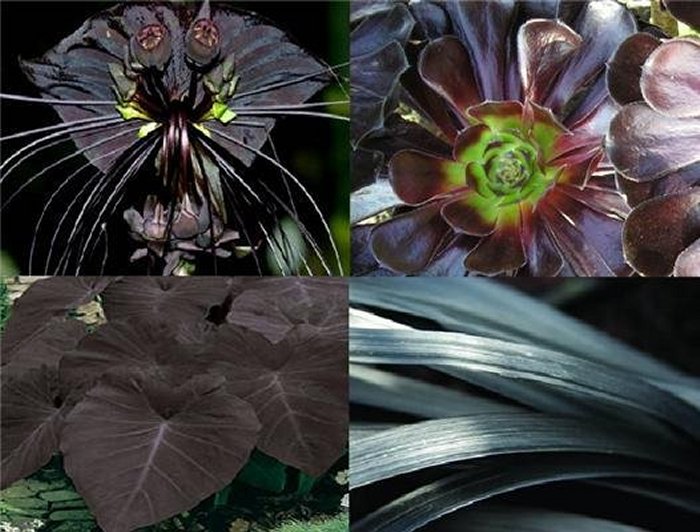
Plants with dim red dwarf suns for example, may appear black to our eyes, absorbing across the entire visible wavelength range in order to use as much of the available light as possible. They may also be able to use infrared or ultraviolet radiation to drive photosynthesis.
For planets orbiting two stars like our own, harmful radiation from intense stellar flares could lead to plants that develop their own UV-blocking sun-screens, or photosynthesizing microorganisms that can move in response to a sudden flare,” said O’Malley-James.
Written by Ellen Lloyd – MessageToEagle.com
Copyright © MessageToEagle.com & Ellen Lloyd All rights reserved. This material may not be published, broadcast, rewritten or redistributed in whole or part without the express written permission of MessageToEagle.com and Ellen Lloyd
Expand for referencesReferences:
Royal Astronomical Society
Related Posts
-
 Extremely Rare And Elegant New Orchid Found Hiding In Plain Sight
-
 Impressive And Rare Hoard Of Silver Coins Dated To The Hasmonean Period (126 BC) – Studied
-
 Secretful Diablo Pyramid Sheds Light On The Mysterious Maya Sun God With Many Faces
-
 El Zacaton: World’s Dеереѕt Wаtеr-Fillеd Sinkhole
-
 First Life On Earth May Come From Primitive Water Ponds – Not Oceans
-
 Oldest Sea Reptile From Age Of Dinosaurs Found On Arctic island
-
 Toxic Chemicals Discovered In Drinking Water In The US
-
 Stonehenge Was An Ancient Database And ‘Memory Code’ – Intriguing Theory Suggests
-
 Insular Dwarfs And Giants More Likely To Go Extinct, Finds Islands Study
-
 Earth Is In Danger Of Being Hit By A Huge Comet Shower From The Sun – Scientists Warn

