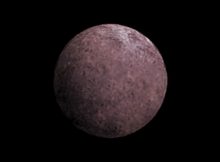
MessageToEagle.com – A faraway object nicknamed “Snow White” is considerably larger than scientists had thought, and is in fact the third-largest dwarf planet in the solar system, a new
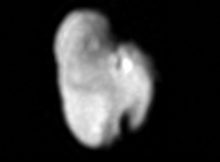
MessageToEagle.com – Pluto’s outermost small moon – Hydra – has the surface covered with nearly pristine water ice, according to the new data, which confirms hints that scientists picked
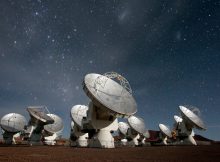
MessageToEagle.com – The mass of a supermassive black hole at the center of giant elliptical galaxy NGC 1332 has been precisely measured by a team of astronomers from the
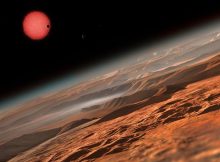
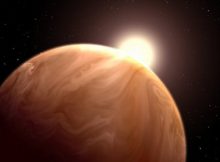
MessageToEagle.com – Three planets with sizes and temperatures similar to those of Venus and Earth, orbiting an ultra-cool dwarf star just 40 light-years from Earth, have been discovered by
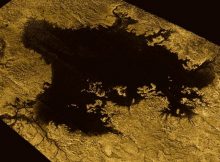
MessageToEagle.com – A new study reveals that Ligeia Mare – a large sea on Saturn’s moon Titan- is composed mostly of pure liquid methane. Ligeia Mare’s shores may be
MessageToEagle.com – When the object we now call SN 1006 first appeared on May 1, 1006 AD, it was far brighter than Venus and visible during the daytime for
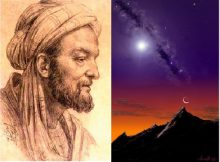
MessageToEagle.com – Scientists who examined a certain ancient text have discovered evidence of the brightest supernova ever observed – the Ibn Sina’s sighting of supernova 1006. Ibn Sina (980-1037
MessageToEagle.com – NASA’s Hubble Space Telescope has spotted a small, dark moon orbiting Makemake, the second brightest icy dwarf planet — after Pluto — in the Kuiper Belt. The
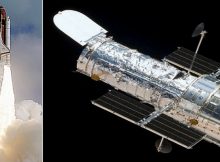
MessageToEagle.com – On April 24, 1990, the Space Shuttle Discovery lifted off from Earth, from Kennedy Space Center in Florida, with the Hubble Space Telescope. The following day, Hubble was released into
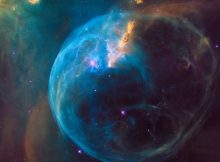
MessageToEagle.com – An image of an enormous bubble being blown into space by a super-hot, massive star marks the 26th anniversary of the launch of Nasa’s Hubble Space Telescope
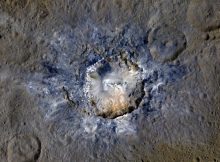
MessageToEagle.com – NASA’s Dawn spacecraft presents spectacular images of bright craters on the dwarf planet Ceres. The pictures were taken 386km (240 miles) from the surface of Ceres, during the
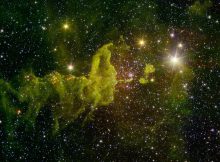
MessageToEagle.com – A new image from NASA’s Spitzer Space Telescope presents the Spider Nebula, officially named IC 417, that lies near a much smaller object called NGC 1931 not
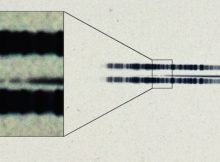
MessageToEagle.com – It turns out that a 1917 image on an astronomical glass plate from our Carnegie Observatories’ collection shows the first-ever evidence of a planetary system beyond our
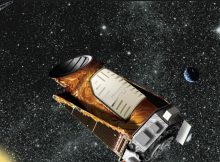
MessageToEagle.com – Mission operations engineers have successfully recovered the Kepler spacecraft from Emergency Mode (EM). On Sunday morning, the spacecraft reached a stable state with the communication antenna pointed
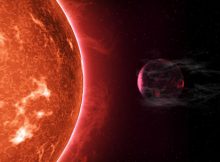
MessageToEagle.com – Astrophysicists at the University of Birmingham have used data from the NASA Kepler space telescope to discover a class of extrasolar planets whose atmospheres have been stripped
MessageToEagle.com – During a scheduled contact on Thursday, April 7, mission operations engineers discovered that the Kepler spacecraft was in Emergency Mode (EM). EM is the lowest operational mode
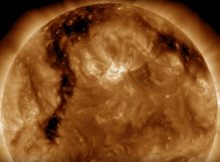
MessageToEagle.com – NASA has released a video captured by the Solar Dynamics Observatory showing an elongated coronal hole on the surface of the sun. A long coronal hole can be
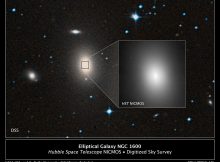
MessageToEagle.com – A near-record supermassive black hole discovered in a sparse area of the local universe indicate that these monster objects may be more common than once thought, according
MessageToEagle.com – The bombardment of Mars some 4 billion years ago by comets and asteroids likely enhanced climate conditions enough to make the planet more conducive to life, at
MessageToEagle.com – New research by Harvard astronomers Peter Williams and Edo Berger shows that the radio emission believed to be an afterglow actually originated from a distant galaxy’s core
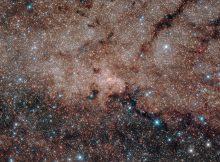
MessageToEagle.com – Peering deep into the heart of our Milky Way galaxy, NASA’s Hubble Space Telescope reveals a rich tapestry of more than half a million stars. Except for
MessageToEagle.com – The most detailed map of a small, rocky ‘super Earth’ to date has been created by an international team of astronomers, led by the University of Cambridge.
MessageToEagle.com – A newly discovered white dwarf, about 1,200 light-years away in the constellation Draco, has no hydrogen or helium at its surface. Instead, a star – nicknamed SDSS
MessageToEagle.com – Periodic mass extinctions on Earth, as indicated in the global fossil record, could be linked to a suspected ninth planet, according to research published by a faculty
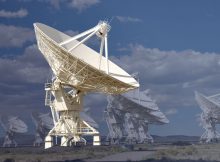
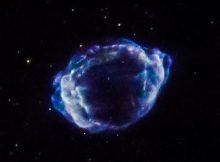
MessageToEagle.com – Scientists have used data from NASA’s Chandra X-ray Observatory and the NSF’s Jansky Very Large Array to determine the likely trigger for the most recent supernova in