
Legendary ‘Orichalcum Metal’ Related To Atlantis Found In 2,600-Year-Old Shipwreck
MessageToEagle.com – A shipwreck sunk 2,600 years ago, off the coast of Gela in southern Sicily and the story of this ship is still fascinating today.
The ship – dated to the first half of the sixth century – was on its way to Gela in Sicily, possibly coming from Greece or Asia Minor.
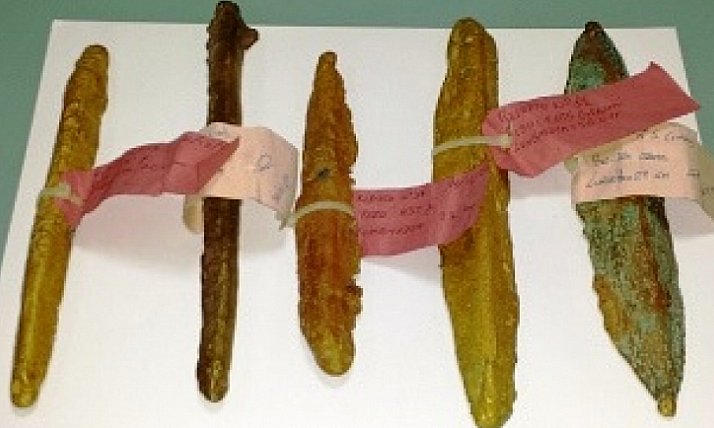
It was carrying ingots of orichalcum, ancient gleaming metal, which according to ancient Greeks was supposed to be mined in the legendary Atlantis, a land we have never been able to localize.
In 2015, underwater archaeologists recovered 39 orichalcum lumps from the shipwreck and earlier this month, additionally 47 pieces of this precious alloy have emerged from the seas of Sicily, reports Seeker.
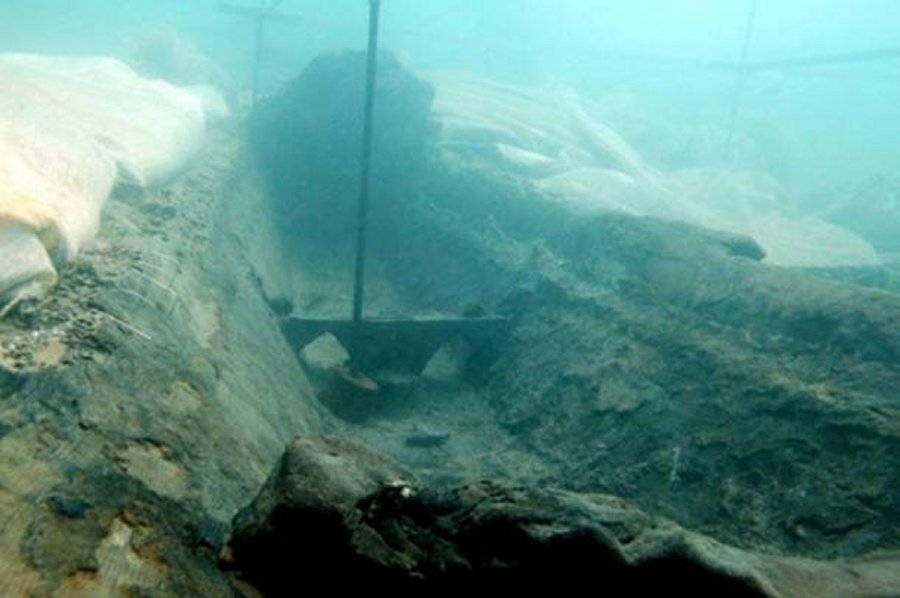
“The ship dates to the end the sixth century B.C.,” said Sebastiano Tusa, an archaeologist and and Sicily’s superintendent of the sea, said.
“It was likely caught in a sudden storm and sunk just when it was about to enter the port.”
According to the ancient Greeks, it was invented by Cadmus, a Greek-Phoenician mythological character. The fourth century B.C. Greek philosopher Plato made orichalcum a legendary metal when he mentioned it in the Critias dialogue (460-403 BC).
See also:
Orichalcum: Mysterious Metal Linked To Legendary Atlantis Discovered In Shipwreck
Hyperborea Or Atlantis Ruins – Underground Secrets Of The Sacred Lake On The Arctic Circle
Bolivia And The Mystery Of The Twins Of Atlantis
Plato wrote that the metal, second only in value to gold, was mined in Atlantis and was used to cover Poseidon’s temple interior walls, columns and floors. A legend says that the temple stood on pillar made of orichalcum and inscribed with Poseidon’s laws.
Today, most scholars agree orichalcum is a brass-like alloy, which was made in antiquity by cementation. This process was achieved with the reaction of zinc ore, charcoal and copper metal in a crucible.
Using X-ray fluorescence, researchers have analyzed the 39 ingots and concluded that they are made with 75-80 percent copper, 15-20 percent zinc and small percentages of nickel, lead and iron.
This brass-like alloy was perhaps not as precious as Plato described it; however, it was valuable enough to be used by skilled craftsmen in workshops of the ancient city of Gela.
MessageToEagle.com
Related Posts
-
 Underwater Stone Age Village Habonim North Found Off Israel’s Carmel Coast Thrived During Climate Change
-
 New Light On Prehistoric Chalk Plaques From Stonehenge Using Innovative Technology
-
 Impressive Huge Ancient Lamassu Statue Unearthed In Nineveh, Iraq
-
 Discovered 2000-Year-Old Mauryan Structure May Lead To The Lost Ashoka Pillar Site
-
 New DNA Study Reveals How The Black Rat Colonized Europe In The Roman And Medieval Periods
-
 Ancient DNA Of Segorbe Giant Reveals A Brutal Event In Medieval Spain
-
 Chumash Indians Used Shell Beads As Money 2,000 Years Ago – New Study
-
 Maya’s Long Count Calendar Linked To European Calendar According To Carbon-14 Dating
-
 Cave Discovery Reveals Native And European Religious And Spiritual Encounters In The America
-
 Hundreds Of Well-Preserved Submerged Ancient Roman Treasures Discovered At The Bottom Of Lake Neuchâtel

