
Milky Way And Its Neighboring Galaxies Reside In A Gigantic Celestial Void
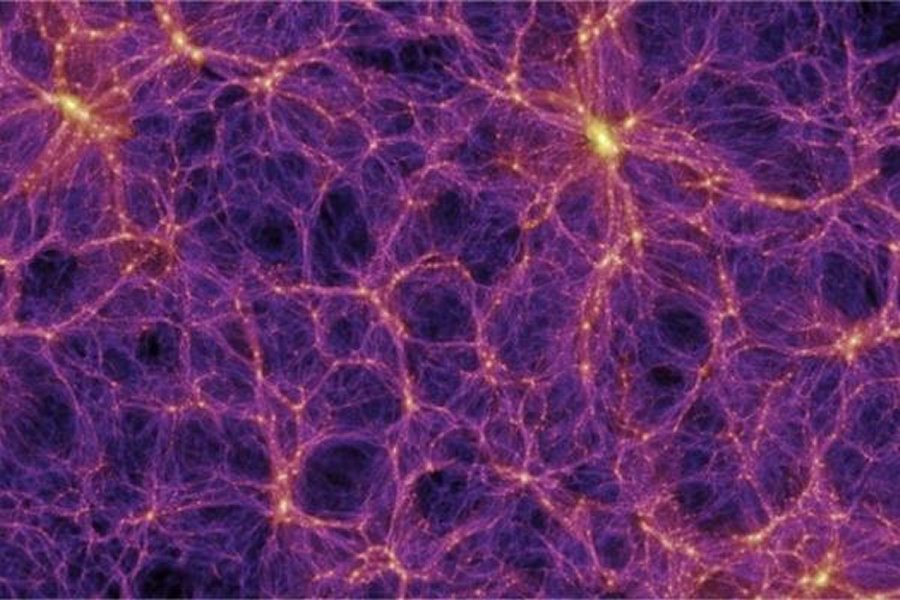
MessageToEagle.com – The Milky Way and its neighboring galaxies reside in an enormous cosmic void – a region of space containing far fewer galaxies, stars and planets than expected.
This gigantic celestial void is estimated to be approximately 1 billion light years across.
A new study conducted by Ben Hoscheit, an undergraduate student at the University of Wisconsin, supports a 2013 research, which also showed the Milky Way exists in a sparsely populated region of the universe.
The study can be used to solve another problem astronomers have observed, namely the expansion rate of the Universe.
“No matter what technique you use, you should get the same value for the expansion rate of the Universe today,” Ben Hoscheit, a Wisconsin student and lead author of the research, said in a news release.
“Fortunately, living in a void helps resolve this tension.”
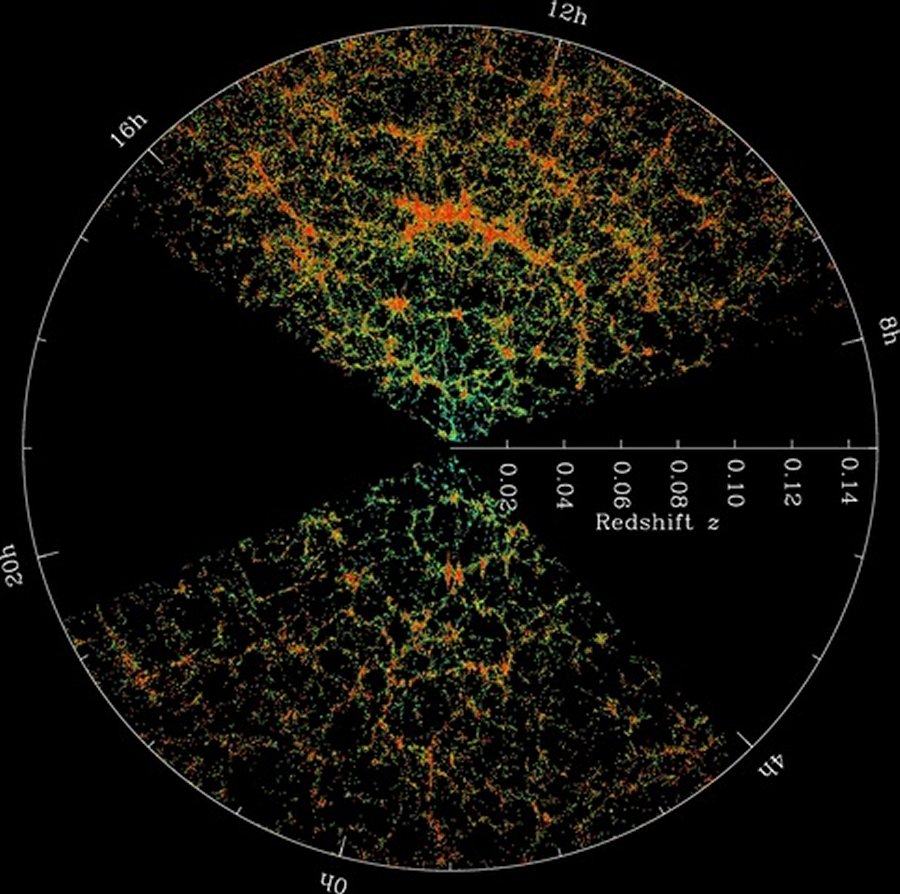
The Hubble Constant is the unit used by cosmologists to describe the rate at which the universe is expanding today. However, different groups of astronomers have developed different techniques for measuring this unit.
This is because outside the void there is far more matter exerting a slightly larger gravitational pull. One method to measure the expansion of the Universe, a value known as the Hubble Constant, uses nearby supernovae, which have a predictable amount of energy.
See also:
Boss Great Wall: Gigantic Wall Of Galaxies Located In Deep Space
Great Attractor: Mysterious Gravitational Anomaly Beyond Hydra-Centaurus Supercluster
Another technique uses the Cosmic Microwave Background (CMB), the leftover light from the Big Bang. This is measured across the Universe, and so would not be affected by the void. Tiny differences in the CMB are thought to end up as large-scale structures in the Universe, including the clusters of galaxies surrounding relatively empty voids.
“It is often really hard to find consistent solutions between many different observations,” said Professor Amy Barger, a University of Wisconsin–Madison astronomer.
“What Ben has shown is that the density profile previously measured is consistent with cosmological observables. One always wants to find consistency, or else there is a problem somewhere that needs to be resolved.”
The new analysis made by Hoscheit, says Barger, shows that there are no current observational obstacles to the conclusion that the Milky Way resides in a very large void. As a bonus, she adds, the presence of the void can also resolve some of the discrepancies between techniques used to clock how fast the universe is expanding.
Research is presented at a meeting at the American Astronomical Society on June 6.
MessageToEagle.com
Related Posts
-
 Tremendous Collision Between Two Neutron Stars – Spectacular Cosmic Event Seen For The First Time
-
 Distant Exoplanet HAT-P-11b With Helium Filled Atmosphere In Cygnus Constellation
-
 Cosmic ‘Death Star’ Is Responsible For Destruction Taking Place In Constellation Virgo
-
 Powerful Quasar Tsunamis Can Prevent Stars From Forming
-
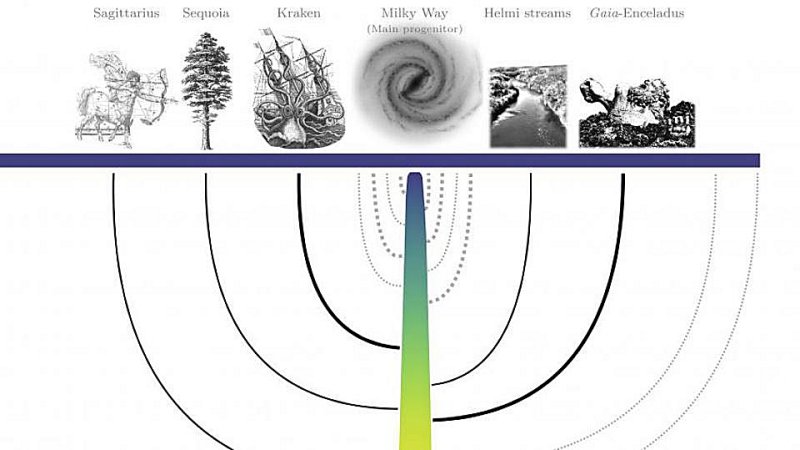 Previously Unknown Collision Between Milky Way And Enigmatic Kraken Galaxies – Revealed
-
 Our Moon Is A Planet – Scientists Say
-
 To Find Life On Other Planets, NASA Rocket Team Looks To The Stars
-
 A Crystal Ball Into Our Solar System’s Future
-
 Best Evidence For Elusive Mid-Sized Black Hole – Found By Hubble Astronomers
-
 Unknown Giant Planet Responsible For Mysterious Eclipses In The Orion Constellation

