
Ocean Warm Temperatures Influence Snowfall In Antarctica
Eddie Gonzales Jr. – MessageToEagle.com – Researchers report that warm temperatures in the South Atlantic Ocean are linked to increased snowfall events in Antarctica.
Snowfall deep inside East Antarctica has increased in recent decades, and changes in distant ocean temperatures may be partly responsible. Using long-term climate data and observations from Dome Fuji station, researchers found that the increase in snowfall is strongly linked to atmospheric blocking patterns that carry moist air into inland Antarctica.
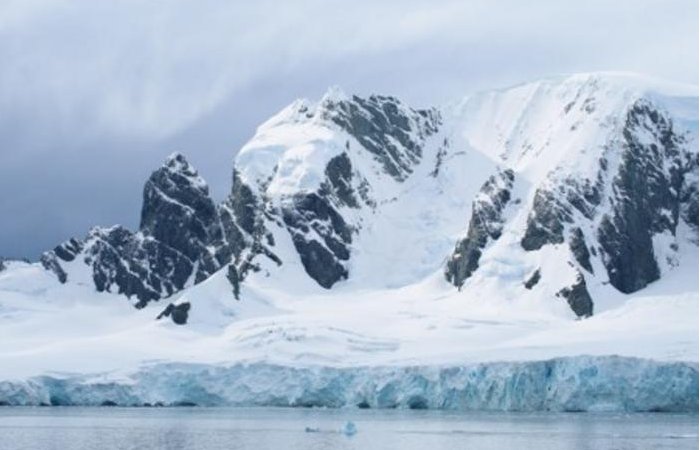
Researchers found that snowfall deep inside Antarctica is linked to atmospheric patterns influenced by distant ocean temperatures.Image credit: “Antarctica landscape” by szeke from Openverse
These patterns are, in turn, influenced by sea surface temperature changes in the subtropical South Atlantic Ocean—highlighting important climate connections across vast distances.
Snowfall in Antarctica plays an important role in regulating global sea levels, but understanding the underlying reason behind the extensive snowfall in the continent’s remote interior remains a major scientific challenge. Changes like the harsh environment, extremely low temperatures, and long periods of darkness make year-round observations difficult, especially when it comes to observing inland regions far from the coast.
Exploring this, research conducted by researchers at the National Institute of Polar Research (NIPR), Japan, reports that snowfall deep inside East Antarctica is influenced by the sea surface temperatures thousands of kilometers away in the South Atlantic Ocean. The study was led by Project Researcher Kyohei Yamada from NIPR, Japan, along with Professor Jun Inoue, Assistant Professor Naohiko Hirasawa, and Assistant Professor Kazutoshi Sato, who are from NIPR and are also affiliated with the Graduate University for Advanced Studies, SOKENDAI, Japan.
The study was made available online on May 13, 2026, and published in Volume 131, Issue 10 of the Journal of Geophysical Research: Atmospheres on May 28, 2026.
The team focused on Dome Fuji station (DF), one of the most remote research sites in Antarctica. They studied weather and snowfall patterns from 1979 to 2024 using ERA5, a modern climate dataset, that combines weather observations with computer-based atmospheric simulations. To check the accuracy of the data, the researchers compared it with detailed measurements collected during the Japanese Antarctic Research Expedition (JARE44) between 2003 and 2004.
As continuous observations in inland Antarctica are rare, the JARE44 dataset proved to be very valuable. The expedition carried out at DF was to measure precipitation rates, cloud conditions, radiation, wind, and atmospheric structure under harsh conditions.
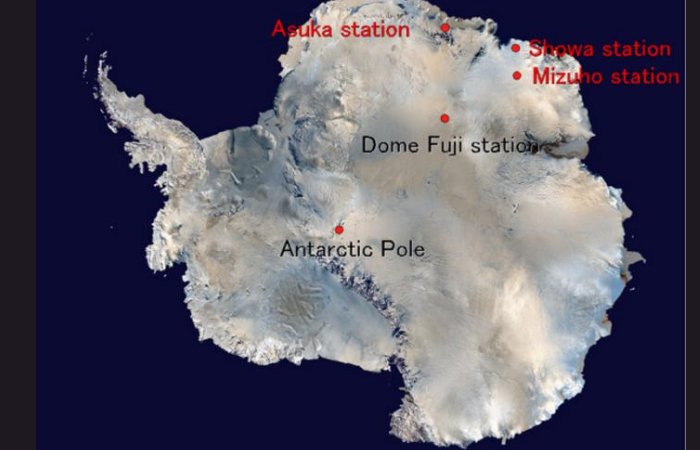
Dome Fuji Station, located deep in East Antarctica, served as the main observation site for the study. Image credit: Forestfarmer – Wikimedia Commons
“ERA5 captured Antarctic weather conditions much more accurately than older datasets, however, it still tended to underestimate total precipitation,” says Project Researcher Yamada. Although the system slightly underestimated total snowfall, it was able to capture the frequency and timing of snowfall events more effectively than earlier datasets.
One of the study’s most important findings involved extreme snowfall events. Out of the 311-day observation period, only 12 days were classified as extreme events, yet they accounted for nearly 25% of the total annual snowfall at DF.
The researchers also found that overall snowfall at DF has increased significantly over the past 46 years. However, this long-term increase was mainly caused by snowfall events occurring more frequently, rather than individual events becoming more intense.
To understand the reason behind this, researchers examined large-scale atmospheric patterns over the Southern Hemisphere. They discovered that atmospheric blocking patterns known as “blocking ridges” have become more common near 45°E longitude. These systems help create favorable conditions for snowfall by carrying warm, moist air from coastal areas deep into the Antarctic interior.
The team also discovered that these atmospheric patterns are connected to the sea surface temperature changes in the subtropical South Atlantic Ocean. Thus, warming and cooling in distant ocean regions may influence snowfall patterns far inside Antarctica.
“Antarctic snowfall can be affected by climate changes occurring far beyond the polar region,” notes Project Researcher Yamada.
This study holds a great significance as the snowfall in Antarctica directly affects the stability of the Antarctic ice sheet, which indirectly influences the global sea levels. The research could also improve understanding of ancient climate patterns preserved in Antarctic ice cores. Thus, the reliable confirmation of the ERA5 dataset for inland Antarctica may help improve future studies of Antarctic climate change and help scientists better understand the connectivity of global climate systems across vast distances.
Source – Research Organization of Information and Systems – via Eurekalert
Written by Eddie Gonzales Jr. – MessageToEagle.com Staff Writer
Related Posts
-
 Ancient People In Tasmania Witnessed Stunning Auroras When The Earth’s Magnetic Field Flipped
-
 Desert Dust In Europe Is Increasing
-
 Evidence Of Ancient Gigantic Tsunami That Struck Tel Dor Maritime City Mound, Israel
-
 What Would Happen If The Earth’s Axis Suddenly Tilted By 50 Degrees Or More?
-
 Lightning Strikes Played A Vital Role In Life’s Origin On Earth
-
 Dangerous Clouds At The Edge Of Space Are Spreading
-
 Did “Dark Matter” Or A Star Called Nemesis Kill The Dinosaurs?
-
 Link Between Rates Of Metal Production And Toxic Lead Exposure In Humans – New Study
-
 Different Form Of Complex Life Existed On Earth Before Us – Scientists Say
-
 Ancient Fossils Reveal Climate Altered Humans’ Body And Brain Size

