
Tough Bacteria That Turns Toxic Chemicals Into 24-Karat Gold
MessageToEagle.com – It’s a strange and very complicated creature – bacteria or rather super bacteria! It can live in super extreme conditions like drought, radiation, heat and overcrowding.
It’s able to communicate chemically with each other and consumes sulfur compounds and produce droplets of toxic sulfuric acid (similar to battery acid) as waste!
Some bacteria have evolved several mechanisms to tolerate presence of heavy metals and detoxify them. They are resistant to and grow on metals, using them for energy and groth and respiration.
A few years ago, environmental scientists at UC Riverside have discovered that the Rancho La Brea tar pits in downtown Los Angeles, Calif., house hundreds of new species of bacteria with unusual properties, allowing the bacteria to survive and grow in heavy oil and natural asphalt, with no water and little or no oxygen.
Now, yet another tough super bacteria organism have been discovered by Michigan State University researchers.
This time, it’s the metal-tolerant bacteria Cupriavidus metallidurans that can withstand incredible amounts of toxicity in the process of creating 24-karat gold.
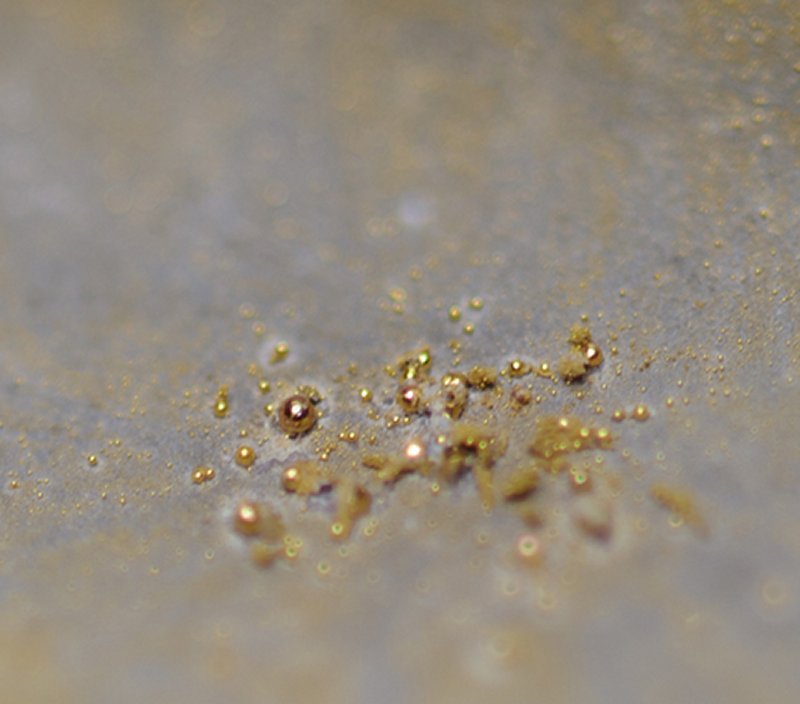
A metal-tolerant Cupriavidus metallidurans can grow on massive and toxic gold chloride – or liquid gold, a toxic chemical compound found in nature.
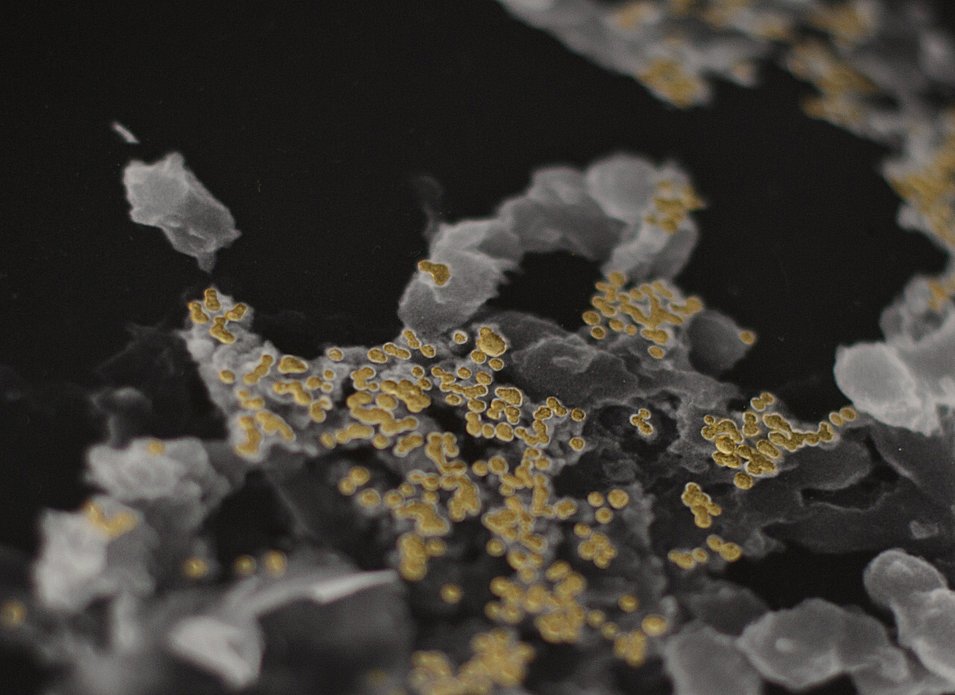
In an art-science experiment called “The Great Work of the Metal Lover,” MSU researchers found the bacterium known as Cupriavidus metallidurans was able to turn toxic gold chloride (or “liquid gold”) into solid 24-karat gold. In fact, the bacteria’s ability proved to be at least 25 times stronger than previously reported: over a week, the bacteria produced a gold nugget from the toxic liquid.
The process of such gold production is possible but on a larger scale, the financial burden of it is significantly greater than the benefit.
Additionally, the researchers’ success in creating gold raises questions about greed, economy and environmental impact, focusing on the ethics related to science and the engineering of nature.
“Art has the ability to probe and question the impact of science in the world, and ‘The Great Work of the Metal Lover’ speaks directly to the scientific preoccupation while trying to shape and bend biology to our will within the postbiological age,” Brown said.
© MessageToEagle.com
Related Posts
-
 Past Present And Future Exist All At Once – Unravelling Secrets Of Quantum Physics
-
 Noasaurid: New Carnivorous Two-Legged Dinosaur Found In Australia
-
 Insular Dwarfs And Giants More Likely To Go Extinct, Finds Islands Study
-
 Newly Discovered Electrical Activity Within Cells Could Change The Way Researchers Think About Biological Chemistry
-
 Skull Of This Giant Wombat – Ramsayia – Is Around 80,000 Years Old
-
 Tristan da Cunha: The Remotest Inhabited Island
-
 HD 189733b: A Blue Marble Planet Where It Rains Super-Hot Glass
-
 Hyperion ‘Cosmic Hamburger’: Strange Moon Of Saturn With Even Stranger Craters
-
 Incredible Giant String-Like Sea Creature Spotted In Australia Stuns Scientists
-
 Huge DNA Tree Of Life Created Using 1.8 Billion Letters Of Genetic Code

