
Australia’s Pilbara Rock Art Older Than The Ice Age
MessageToEagle.com – The rugged and remote Pilbara region is one of Australia’s most fascinating places with traces of Earth’s earliest life.
The region’s rock art tracks prehistoric habitation older than the ice age.
When archaeologist Dr Ken Mulvaney looks across the water from the Burrup Peninsula, he sees an ocean that is younger than the Aboriginal rock art he is studying.
“When people came to these shores, in fact the coastline was 160 kilometres out from where it is today,” Dr Mulvaney told Hilary Smale on ABC North West WA Local Radio.
It can be hard for European Australians to conceptualise that Aboriginal occupancy of the Pilbara is over five times more ancient than the Egyptian pyramids.
“We know people were in the Pilbara region from at least 42,000 years ago. We know the people had art and very sophisticated culture back 40,000 years ago,” he said.
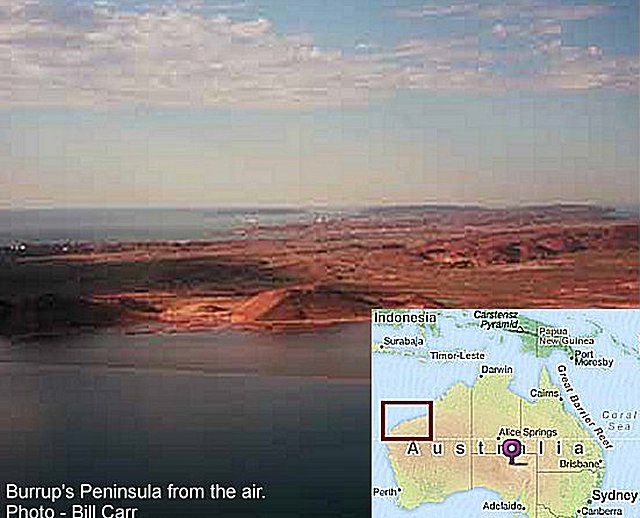
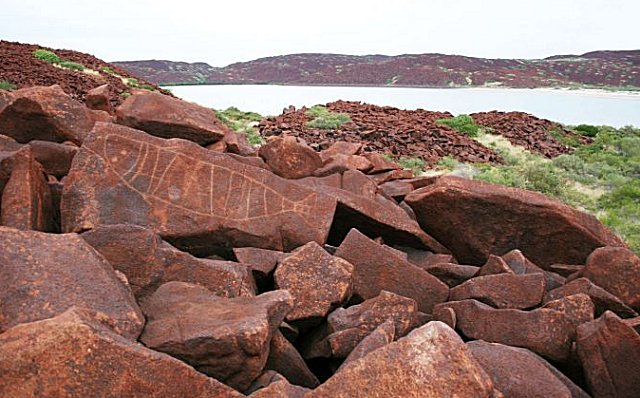
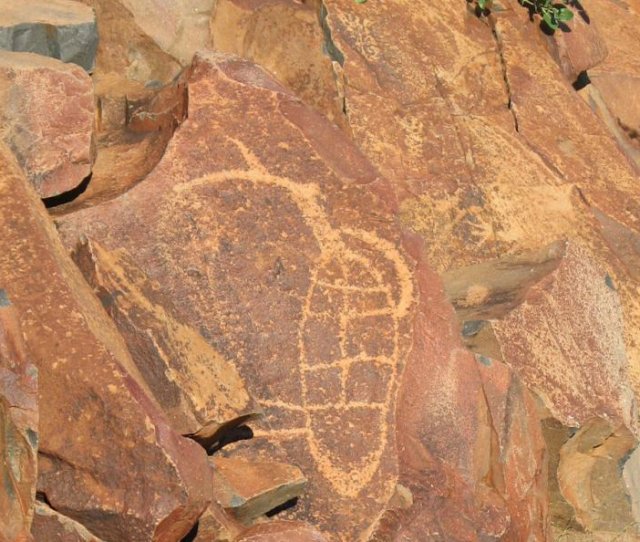
Dr Mulvaney has published his research of just some of what is estimated to be over one million rock carvings, known as petroglyphs, on the Burrup Peninsula just 15 minutes’ drive from the Pilbara mining town of Karratha.
“One valley on the Burrup would amount to what you’d find in a country in Europe, in terms of rock art. And it’s rock art that spans upwards of 30, possibly 40,000 years.”
“There are two major changes over the 40,000 years, and it relates to the ice age and the change in sea levels as a result,” said Dr Mulvaney.
Many of the carvings record the food items of the area, which change as the last ice age ended and melting icecaps caused sea levels to rise, turning inland plains into coastal headlands.
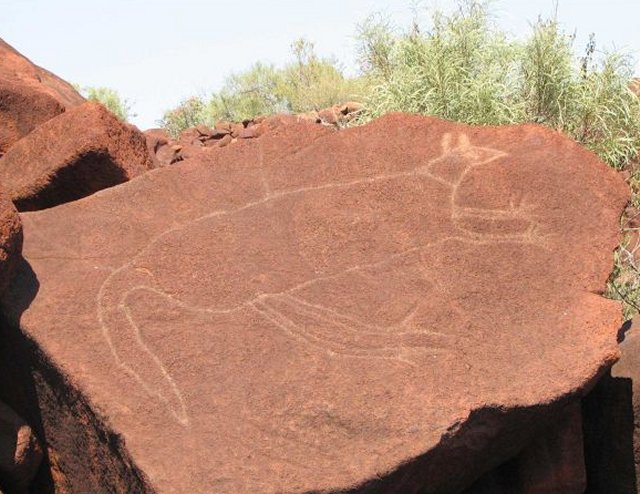
“So kangaroos and emus in the earlier art, fish and turtles in the later art,” he said. “We also have things like the Tasmanian tiger in the art, so we have extinct fauna. We know the tiger in mainland Australia became extinct three-and-a-half thousand years ago.”
“‘Rock art’ is one of those terms we use, but in fact it’s more than art. I can appreciate the aesthetics of an image, but there is also these deep cultural meanings embedded in the art as well.”
Despite the importance of the Burrup Peninsula’s petroglyphs being recognised by experts, Dr Mulvaney said governments have failed to pursue appropriate protection.
“Back in 1980, the area was recognised as meeting the criteria for World Heritage… We are 30 years later and it’s still not progressed,” he said.
Industry associated with the North West Shelf oil and gas region has been developed on the Burrup Peninsula since 1963. Some of the opponents of the industry say over 20 per cent of the petroglyphs have since been destroyed, but the West Australian government says the figure is less than 10 per cent.
Dr Mulvaney said, ironically, the destruction of the rock art had provided some of the best understanding of what had been lost.
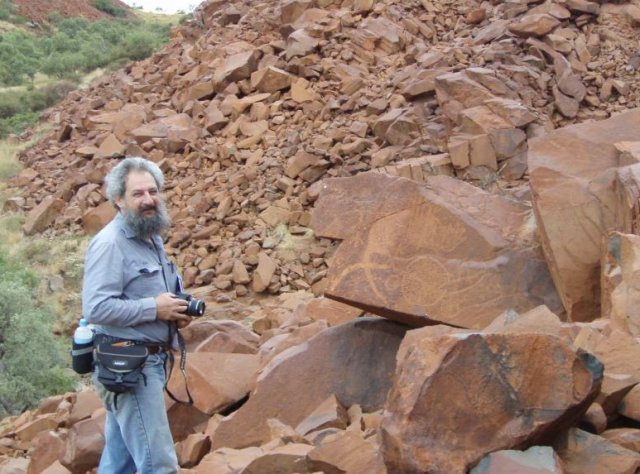
“Most of the information we know has come from surveys that were done prior to development, so those sites no longer exist,” he said.
“I hope also that in a wider public recognition of this place that it will lead to, rightly, World Heritage recognition and protection through the UNESCO convention.”
Dr Mulvaney believed World Heritage recognition of the Burrup Peninusula could help the Pilbara become less prone to the booms and busts of the resources industries.
“We need to diversify, for Karratha, Dampier, and all these places to survive into the future. Tourism is one of those industries that will aid in that… 200-odd thousand extra visitors will come to an area solely because it is a World Heritage place.”
MessageToEagle.com
Related Posts
-
 Mysterious Cucuteni-Trypillian Culture Burned Their Settlements For Unknown Reasons
-
 Is Rh Negative Blood Type Of Extraterrestrial Origin?
-
 Instability Near The North Pole Caused 48 Rare Lightning Discharges
-
 Unique Ceremony Reveals How Your Brain Can Control Your Body Temperature – G-Tummo Meditation Works!
-
 Extraordinary And ‘Intelligent’ Textile That Adapts To Heat And Gives You Comfort
-
 DNA Reveals How Europeans Are Related
-
 Sarmizegetusa And Its Andesite Sun Artifact Similar To The Mayan Calendar
-
 Knowledge Of Earth’s Magnetic Field And Our Planet’s History May Be Wrong – Scientists Say
-
 Unique Oil Eating Bacteria Found In Mariana Trench – Deepest Part of Our Oceans
-
 Composition Of Earth And Sun Are The Same But Earth Is Not As Volatile As Sun

