
Sahara Desert Is Continuously Expanding – New Study Clearly Shows
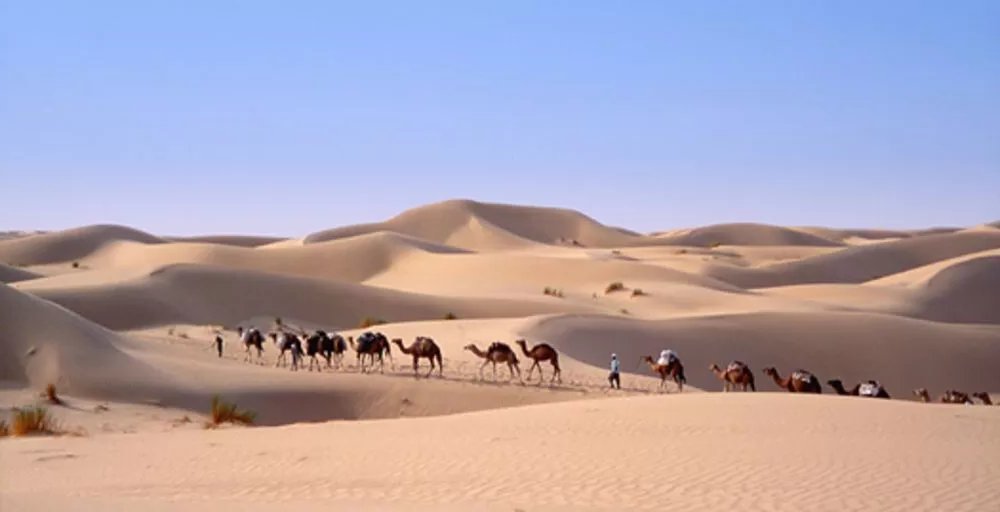
MessageToEagle.com – The Sahara- the world’s largest desert the Sahara Desert, has grown by 10 percent in about 100 years, according to a new study by National Science Foundation (NSF)-funded scientists at the University of Maryland (UMD).
“The trends in Africa of hot summers getting hotter and rainy seasons drying out are linked with factors that include increasing greenhouse gases and aerosols in the atmosphere,” says Ming Cai, a program director in NSF’s Division of Atmospheric and Geospace Sciences, which funded the research.
“These trends have a devastating effect on the lives of African people, who depend on agriculture-based economies.”
In fact, the study shows that other deserts could be expanding as well.
The Sahara is the world’s largest warm-weather desert, roughly equal in size to the contiguous United States. Like all deserts, the boundaries of the Sahara fluctuate with the seasons, expanding in the dry winter and contracting during the wetter summer.
The researchers analyzed annual rainfall data recorded throughout Africa from 1920 to 2013. Deserts are defined by low average annual rainfall — usually 100 millimeters (less than 4 inches) of rain per year or less.
The study also shows that the most notable expansion of the Sahara occurred in summer, resulting in a nearly 16 percent increase in the desert’s average area over the 93-year span covered by the study.

“Our results are specific to the Sahara, but they likely have implications for the world’s other deserts,” said Sumant Nigam, an atmospheric and ocean scientist at UMD, and the senior author of the study.
Why Is Sahara Expanding?
Some possible answers can be human-caused climate change, as well as natural climate cycles, caused the desert’s expansion.
As to climate changes, Nigam said that “climate change is likely to widen this Hadley circulation, causing the northward advance of subtropical deserts,” said Nigam. “The southward creep of the Sahara suggests that additional mechanisms are at work.”
See also:
What Changed The Green Sahara Into A Desert?
Controversial Theory Suggests Humans Turned Sahara Into A Desert
The southern border of the Sahara adjoins the Sahel, the semi-arid transition zone that lies between the Sahara and fertile savannas farther south. The Sahara expands as the Sahel retreats, disrupting the region’s fragile savanna ecosystems and human societies. Lake Chad, which sits at the center of this transition zone, serves as a bellwether for changing conditions in the Sahel.
“The entire Chad Basin falls in the region where the Sahara has crept southward, and the lake is drying out,” Nigam explained.”It’s a very visible footprint of reduced rainfall not just locally, but across the whole region. It’s an indicator of declining water in the Chad Basin.”
Natural climate cycles can affect rainfall in the Sahara and the Sahel region but there is also human-caused climate change.
However, further research is needed to look at what’s driving these trends, for the Sahara and elsewhere.
The study is published today in the Journal of Climate.
MessageToEagle.com
Related Posts
-
 Bad News: Surface Melting Causes Antarctic Glaciers To Slip Faster Towards The Ocean
-
 Argon Found In Air Of Ancient Atmosphere
-
 Study Finds Forest Cover And Runoff Influenced By Freezing Temperatures During Late Paleozoic Ice Age
-
 Mysterious STEVE Light Emissions Emanate From Earth’s Magnetosphere
-
 Hunga Ha’apai Volcano Blasted Sulfate Aerosols And Enormous Amount Of Water Vapor Into The Stratosphere
-
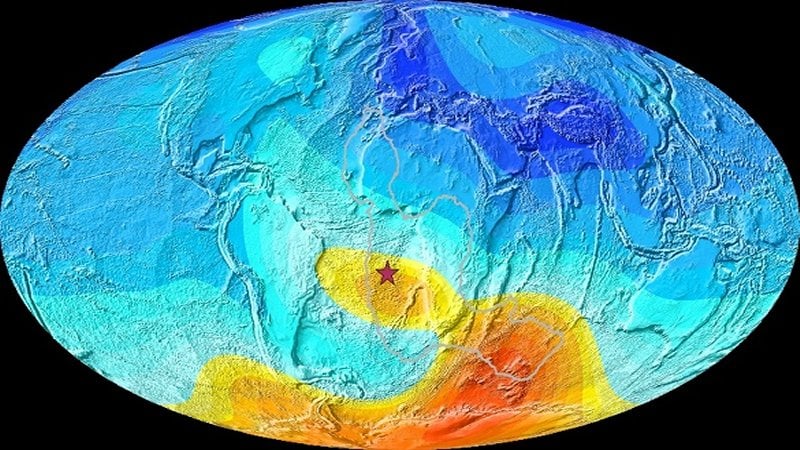 Weird South Atlantic Anomaly – Magnetic Field’s Strange Behavior Started Millions Of Years Ago
-
 Witchcraft Used To Save Endangered Forests And Fight Against Illegal Logging In Romania
-
 Long-Standing Mystery Of What May Have Triggered Ice Age Solved – New Study
-
 How The World’s Rivers Are Changing
-
 Major Earthquake Struck The Atacama Desert 3,800 Years Ago, Forcing Hunter-Gatherers To Move Inland

