
Only Female Mosquitoes Bite Humans And Animals
Question: Why do mosquitoes bite some people not others?
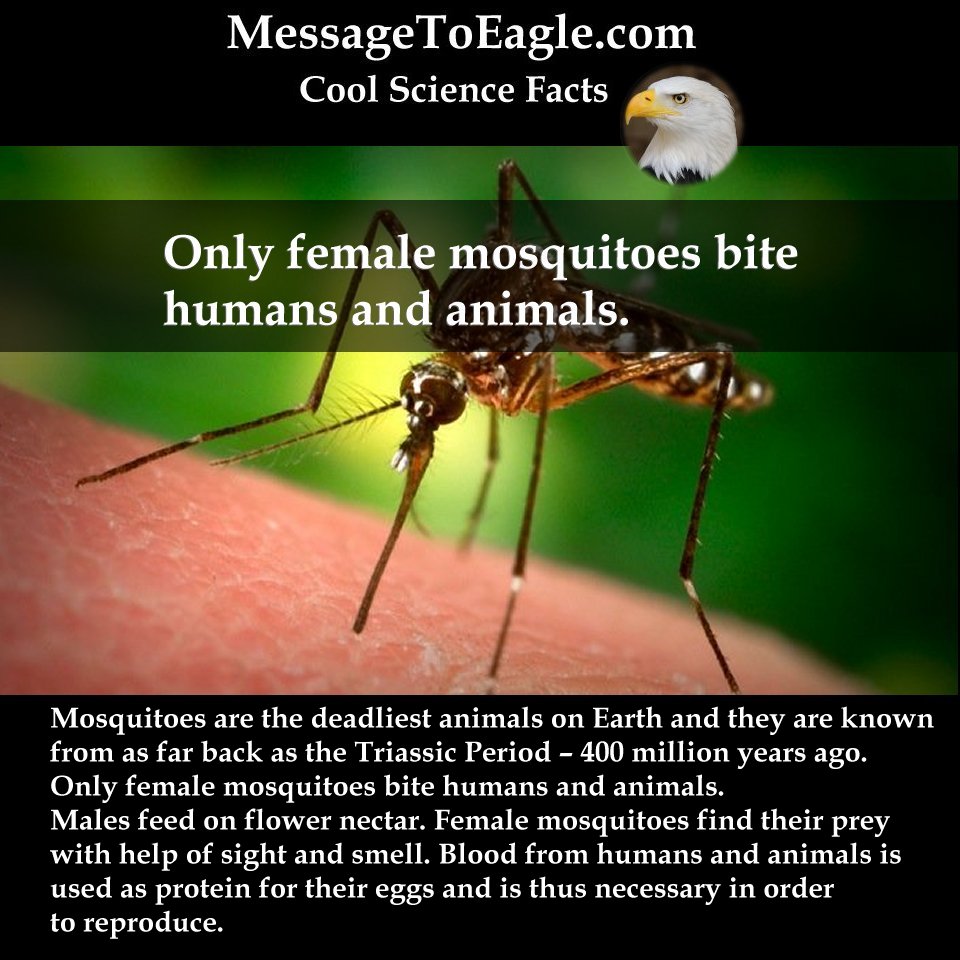
Answer: Mosquitoes are the deadliest animals on Earth and they are known from as far back as the Triassic Period – 400 million years ago. They are known from North America from the Cretaceous – 100 million years ago.
Only female mosquitoes bite humans and animals. Males feed on flower nectar. Female mosquitoes find their prey with help of sight and smell. Blood from humans and animals is used as protein for their eggs and is thus necessary in order to reproduce. Since males don’t bear the burden of producing young, they avoid you completely and head for the flowers instead.
See also: What Is The Human Genome And How Big Is It?
A female mosquito antennae has about 72 types of odor receptors, out of which 27 can recognize chemicals found in human sweat. These chemicals are octenol, non-anal & carbon-dioxide. The people having higher level of these chemicals in their sweat are bitten more by mosquitoes as they can find the smell of these chemicals easily to which their receptors are tuned.
Bigger people are often more attractive to mosquitoes because they are larger targets and they produce more mosquito attractants, namely CO2 and lactic acid.
MessageToEagle.com
Source:
Related Posts
-
 How Many Earths Could Fit Inside The Sun?
-
 Why Are Green Galaxies So Rare?
-
 Amasia – New Future Supercontinent
-
 Winds On Uranus And Neptune Can Reach Supersonic Speeds
-
 Where Is The Hottest Place On Earth?
-
 Black Plants Could Exist On Alien Worlds With Two Suns
-
 The Carrington Event – Biggest Solar Storm In Earth’s History
-
 Pelagornis Sandersi: World’s Largest Bird Had A Wingspan Of 24 Feet!
-
 El Niño And Its Effects On The Planet
-
 Where Do Diamonds Come From?

