
Legendary ‘Orichalcum Metal’ Related To Atlantis Found In 2,600-Year-Old Shipwreck
MessageToEagle.com – A shipwreck sunk 2,600 years ago, off the coast of Gela in southern Sicily and the story of this ship is still fascinating today.
The ship – dated to the first half of the sixth century – was on its way to Gela in Sicily, possibly coming from Greece or Asia Minor.
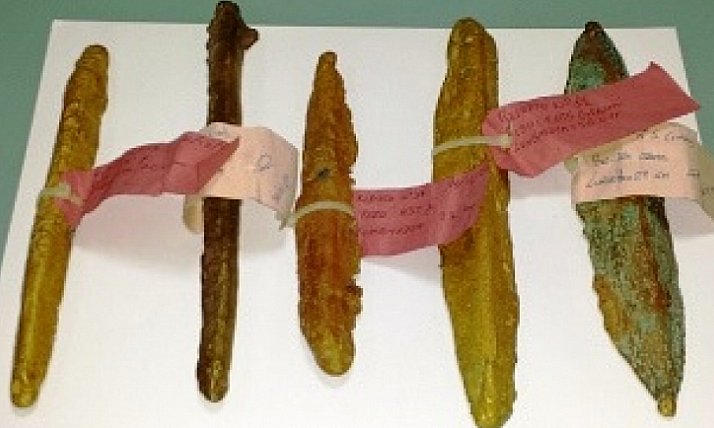
It was carrying ingots of orichalcum, ancient gleaming metal, which according to ancient Greeks was supposed to be mined in the legendary Atlantis, a land we have never been able to localize.
In 2015, underwater archaeologists recovered 39 orichalcum lumps from the shipwreck and earlier this month, additionally 47 pieces of this precious alloy have emerged from the seas of Sicily, reports Seeker.
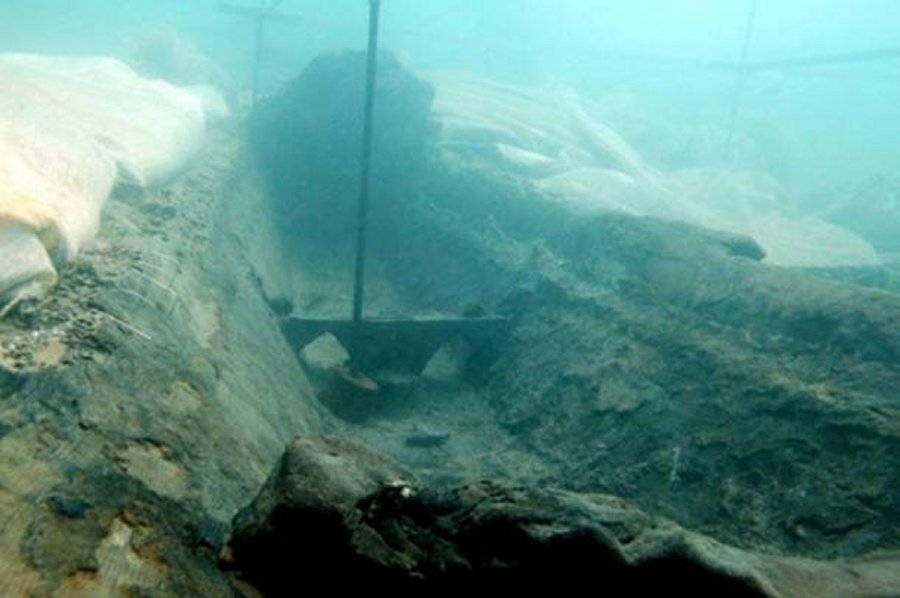
“The ship dates to the end the sixth century B.C.,” said Sebastiano Tusa, an archaeologist and and Sicily’s superintendent of the sea, said.
“It was likely caught in a sudden storm and sunk just when it was about to enter the port.”
According to the ancient Greeks, it was invented by Cadmus, a Greek-Phoenician mythological character. The fourth century B.C. Greek philosopher Plato made orichalcum a legendary metal when he mentioned it in the Critias dialogue (460-403 BC).
See also:
Orichalcum: Mysterious Metal Linked To Legendary Atlantis Discovered In Shipwreck
Hyperborea Or Atlantis Ruins – Underground Secrets Of The Sacred Lake On The Arctic Circle
Bolivia And The Mystery Of The Twins Of Atlantis
Plato wrote that the metal, second only in value to gold, was mined in Atlantis and was used to cover Poseidon’s temple interior walls, columns and floors. A legend says that the temple stood on pillar made of orichalcum and inscribed with Poseidon’s laws.
Today, most scholars agree orichalcum is a brass-like alloy, which was made in antiquity by cementation. This process was achieved with the reaction of zinc ore, charcoal and copper metal in a crucible.
Using X-ray fluorescence, researchers have analyzed the 39 ingots and concluded that they are made with 75-80 percent copper, 15-20 percent zinc and small percentages of nickel, lead and iron.
This brass-like alloy was perhaps not as precious as Plato described it; however, it was valuable enough to be used by skilled craftsmen in workshops of the ancient city of Gela.
MessageToEagle.com
Related Posts
-
 Evidence Of Legendary Ancient Great Flood In China May Re-Write History
-
 Ancient Liangzhu Culture Collapsed Due To Climate Change – New Study Says
-
 Best Preserved 3,000-Year-Old Houses Ever Found In Britain
-
 Gate To The Philistine City Of Gath – Once Home To The Giant Biblical Goliath – Discovered
-
 Discovery Of Second Viking Site Point Rosee In North America Could Re-Write Ancient History
-
 Extraordinary Discovery Of ‘Time Capsule’ Belonging To Jules Verne – It May Contain Unpublished Works
-
 Mysterious Large And Heavy Coin Treasure From The Baltic Sea Displayed For The First Time
-
 Incredible Archaeological Find In America: Bones Of First Colonists And First Church In North America Discovered
-
 One Of The Earliest Human Settlements Yet Known In Scotland – Discovered
-
 Unique 3,000-Year-Old Script Discovered In Georgia Re-Writes Ancient History

