
The Largest Ever Roman Mosaic Unearthed In Southern Turkey
MessageToEagle.com – Ancient floor mosaic art is dated to the second half of 3rd millennium BC.
Many beautiful examples of mosaic floor have already been found, for example at Hadrian’s villa, the mosaics in ancient Pompeii, the villa at Piazza Armerina in Sicily and of course the numerous mosaics at Antioch (3rd Century AD).
Now, archaeologists from the University of Nebraska-Lincoln have discovered the largest Roman mosaic ever found in southern Turkey.
It’s a meticulously crafted, 1,600-square-foot work of decorative handiwork built during the region’s imperial zenith.
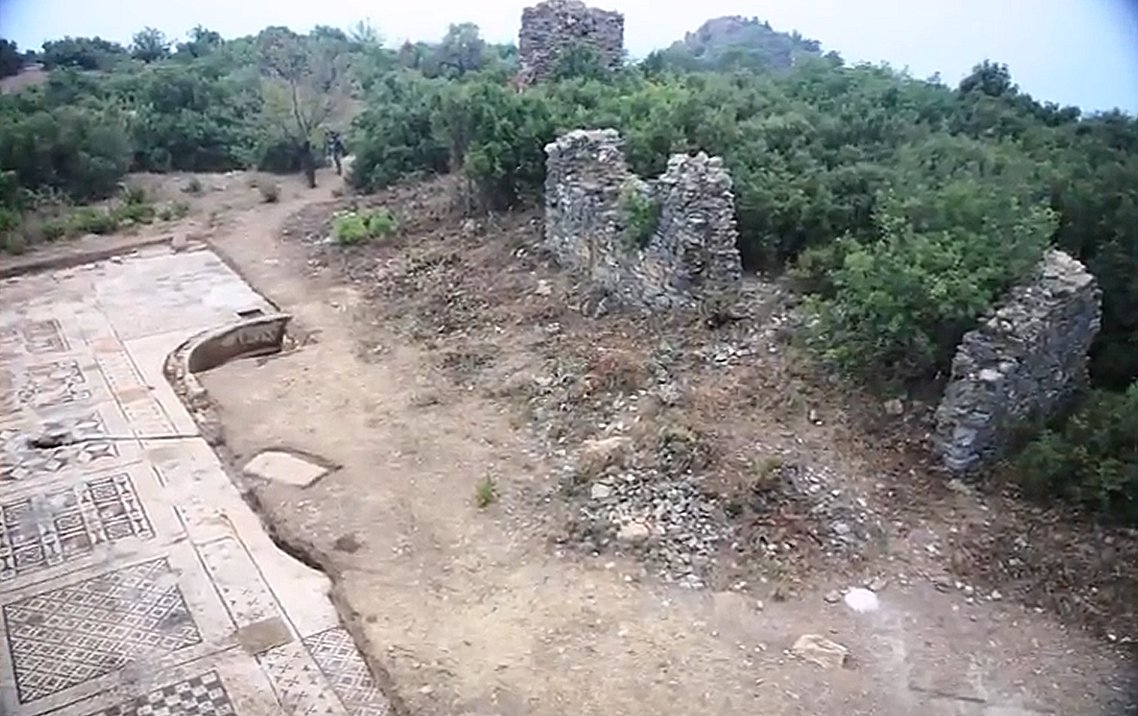
“It’s believed to be the largest mosaic of its type in the region and demonstrates the reach and cultural influence of the Roman Empire in the area in the third and fourth centuries A.D.,” said Michael Hoff, Hixson-Lied professor of art history at UNL and the director of the excavation.
Since 2005, Hoff’s team has been excavating the remains of the ancient city of Antiochia ad Cragum on the southern Turkish coast. Antiochus of Commagene, a client-king of Rome, founded the city in the middle of the first century. “This region is not well understood in terms of history and archeology,” Michael Hoff, Hixson-Lied professor of art history at UNL and the director of the excavation said.
“It’s not a place in which archaeologists have spent a lot of time, so everything we find adds more evidence to our understanding of this area of the Roman Empire.
Antiochia ad Cragum was an ancient Hellenistic city on Cragus mountain overlooking the Mediterranean coast, in the south coastal region of Asia Minor, south of the central Anatolian plateau.
It had temples, baths, markets and colonnaded streets, and thrived during the empire from an economy focused on agricultural products, especially wine and lumber.
“It’s believed to be the largest mosaic of its type in the region and demonstrates the reach and cultural influence of the Roman Empire in the area in the third and fourth centuries A.D.”
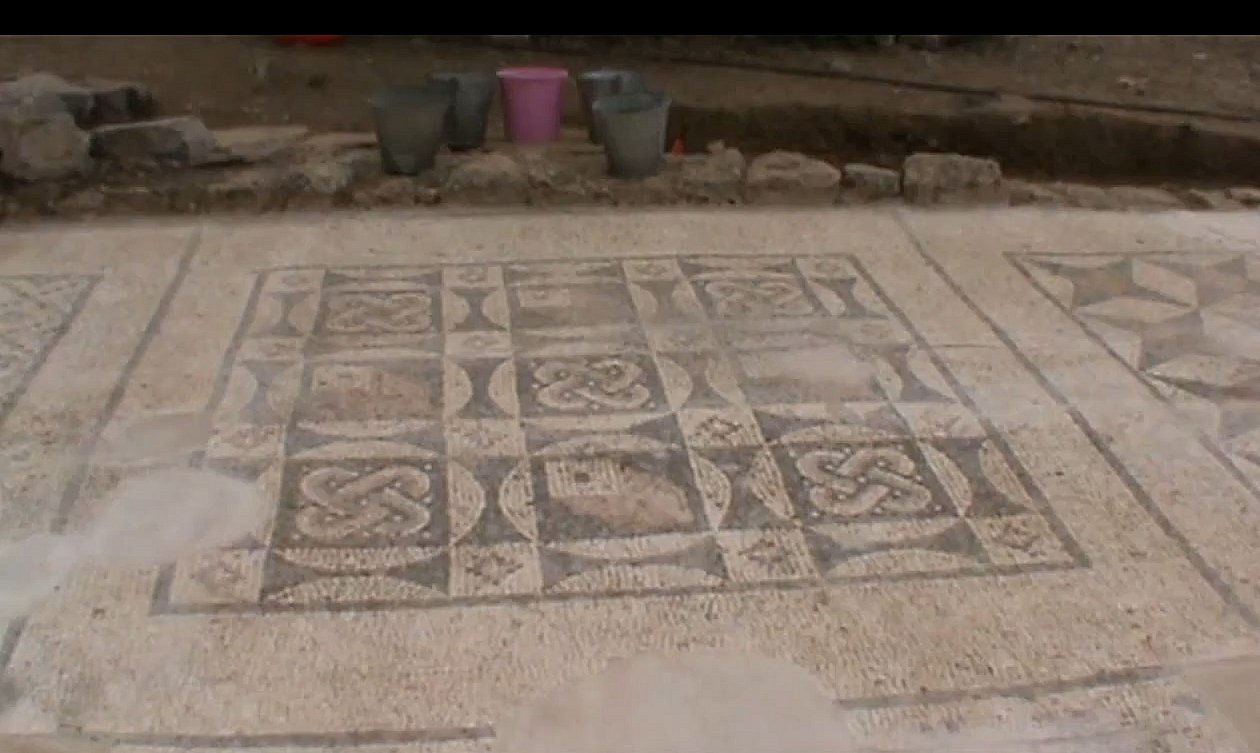
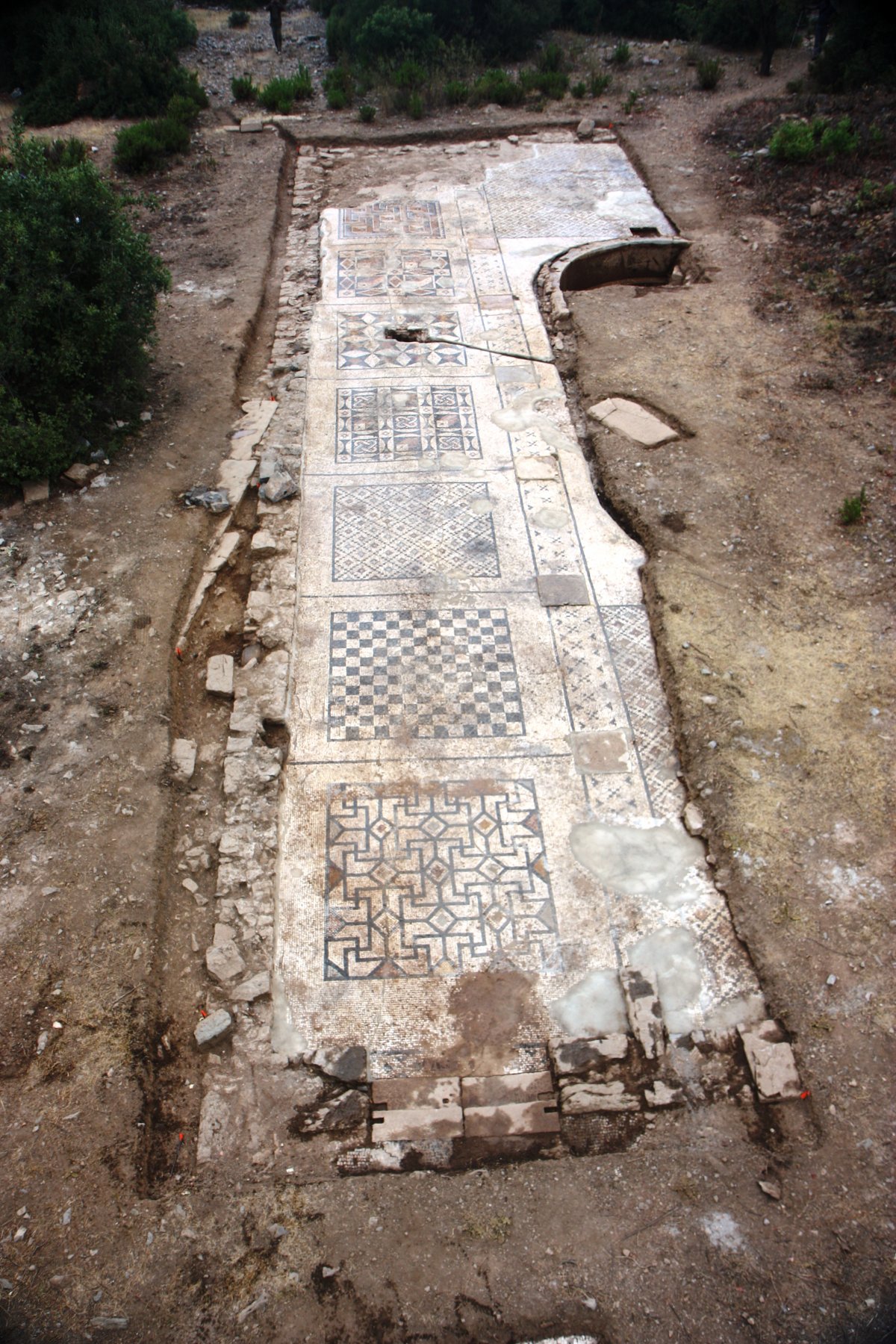
Excavation has focused on a third-century imperial temple, and also a colonnaded street lined with shops. In July, the team began to explore the mosaic, which was part of a Roman bath. The decoration consists of large squares, each filled with different colored geometric designs and ornamentation.
“It appears the mosaic served as a forecourt for the adjacent large bath, and that at least on one side, evidence shows there was a roof covering the geometric squares that would have been supported by piers.”
“Those piers’ remains are preserved,” Prof Hoff said.
Meanwhile, the middle of the mosaic was outfitted with a marble-lined, 25-foot-long pool, which would have been uncovered and open to the sun. The other half of the mosaic, adjacent to the bath, has yet to be revealed but is expected to contain the same type of decoration, Hoff said.
MessageToEagle.com
Related Posts
-
 Explorers Of Lost City Of The Monkey God Contract Unusual Flesh-Eating Disease
-
 Has An Unknown Ancient ‘Israel Silk Road’ Been Discovered?
-
 Kunulua Wasn’t Invaded By The Philistine ‘Sea Peoples’ – Ancient Riddle Is Finally Solved
-
 13,000-Year-Old Engraving May Depict First Paleolithic Social Group Of Humans
-
 Ancient Material From The Mysterious Vitrified Broborg Hill-Fort Can Offer Nuke Waste Solutions
-
 New Insight Into Genetic History And Social Structures In Neolithic And Bronze Age Croatia
-
 DNA Of 10,000-Year-Old Skeletal Remains And Kinship Of Earliest World Settlers
-
 Oldest Footprints Of Pre-Humans Discovered In Crete – They Are 6 Million-Year-Old!
-
 Ancient Religious Ceremony May Shed Light On The Mysterious Qumran Site
-
 Stunning Discovery Of 20,000-Year-Old Rare Hand Stencils In Sydney, Australia

