MessageToEagle.com – Where and when did dogs first split off from wolves? This question has long been debated among scientists. Now a group of researchers from the Sweden’s KTH
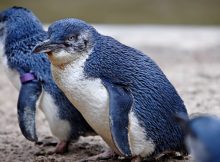
MessageToEagle.com – A team of researchers from the University of Otago and University of Tasmania has discovered that Australian and New Zealand little penguins represent two distinct species, rather
Ellen Lloyd – MessageToEagle.com – We have previously seen what auroras might like on alien worlds. This time we examine how life on planets in binary star systems can
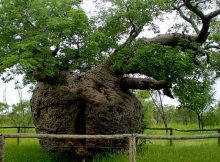
MessageToEagle.com – Baobabs, the iconic bottle trees of Africa and Madagascar, have a single relative, the boab, living in the Kimberley region of northwest Australia. No one knows
MessageToEagle.com – Something very strange and unexplained happened with Europeans DNA 4,000-5,000 years ago. For reasons totally unknown, the genetic markers of this first pan-European culture, were suddenly replaced
MessageToEagle.com – Are plants more intelligent than we assumed? This recent study shows that plants possess surprising abilities. Plants are also able to make complex decisions, say scientists
MessageToEagle.com – A growing body of research shows that birds and other animals change their behavior in response to human noise, such as the din of traffic or
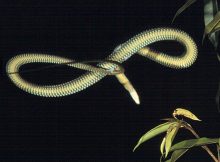
MessageToEagle.com – Some snakes can fly, according to scientists who may have solved the mystery of how flying snakes stay aloft. There are five species of paradise tree
MessageToEagle.com – A 375-million-year-old crocodile-like fish – Tiktaalik roseae could grow up to nine feet in length and hunted in shallow freshwater environments. It’s the best representation of transitional species between
MessageToEagle.com – Plants perform accurate arithmetic division in order to prevent starvation at night, a new study shows. The calculation allows them to use up their starch reserves at
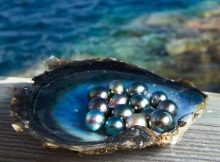
MessageToEagle.com – Pearls, the most flawless and highly prized of them, are perhaps the most perfectly spherical macroscopic bodies in the biological world. Why are they so round? Why are other
MessageToEagle.com – Does talking to your plants make them grow better? Researchers say: Yes! Having a neighborly chat improves seed germination, finds research in BioMed Central’s open access journal
MessageToEagle.com – There is no doubt plants are special in a number of ways. We have previously seen plants that can make music and sing. Plants are very much alive.
MessageToEagle.com – What do plants and humans have in common? Actually, more than most people realize. Plants possess a number of amazing properties and they can “behave” similar to
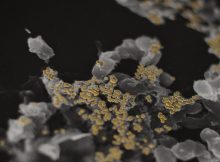
MessageToEagle.com – It’s a strange and very complicated creature – bacteria or rather super bacteria! It can live in super extreme conditions like drought, radiation, heat and overcrowding. It’s
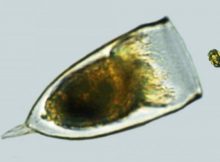
MessageToEagle.com – First observation of predator avoidance behavior by phytoplankton was made by researchers at the University of Rhode Island’s Graduate School of Oceanography. While studying microscopic marine plants
MessageToEagle.com – To most of us, bacteria are simple living organisms, and it may come as surprise to learn that these organisms are capable of sophisticated thinking in relation
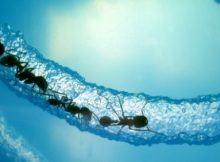
MessageToEagle.com – No, this is not a joke. Ants do have their own internet and scientist call it the “Anternet”. Ants have on several occasions proved that they
MessageToEagle.com – Plants have more in common with humans than most people think. They may be deaf, but they can feel, see, smell and remember, according to plant biologist
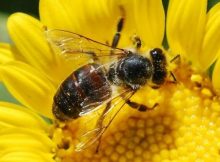
MessageToEagle.com – Bees are fascinating animals! Not only are they capable of reversing aging, but they can also solve complex mathematical problems faster than supercomputers! That is not all!
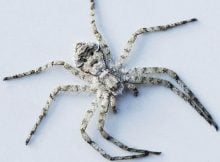
MessageToEagle.com – A Lichen Crab spider is harmless to humans but its look can be a little frightening. The spider has a human face on its back! It is
MessageToEagle.com – Extreme organisms, or one can say, super-organisms are able to live in the extreme. They are super-organisms because they can quickly adapt to the new environment and
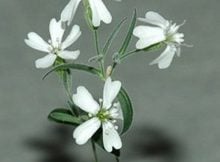
MessageToEagle.com – Buried beneath the frozen sediment in Siberia for more than 30,000 years, one would think this plant had no chance of ever coming back to life again,