
Dung Beetles Use Stars And The Night Sky To Navigate
MessageToEagle.com – Humans and birds have used celestial object visible in the night sky for navigation since ancient times, but did you know some insects also rely on the Milky Way to find their way?
Researchers have discovered that dung beetles use stars and the night sky to navigate.
You might expect dung beetles to keep their “noses to the ground,” but they are actually incredibly attuned to the sky.
On the darkest of nights, African ball-rolling insects are guided by the soft glow of the Milky Way.
While birds and humans are known to navigate by the stars, the discovery is the first convincing evidence for such abilities in insects, the researchers say.
It is also the first known example of any animal getting around by the Milky Way as opposed to the stars. “Even on clear, moonless nights, many dung beetles still manage to orientate along straight paths,” said Marie Dacke of Lund University in Sweden.
“This led us to suspect that the beetles exploit the starry sky for orientation—a feat that had, to our knowledge, never before been demonstrated in an insect.”
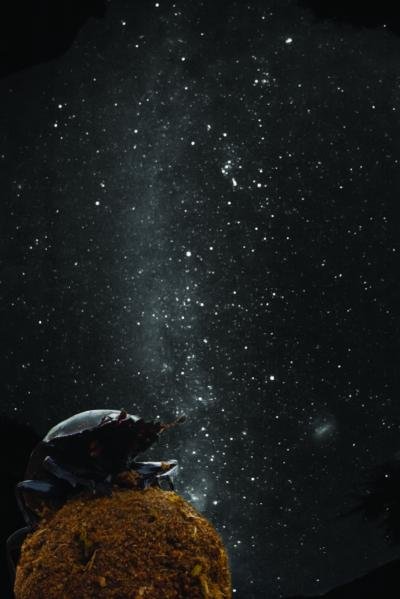
Dacke and her colleagues found that dung beetles do transport their dung balls along straight paths under a starlit sky but lose the ability under overcast conditions.
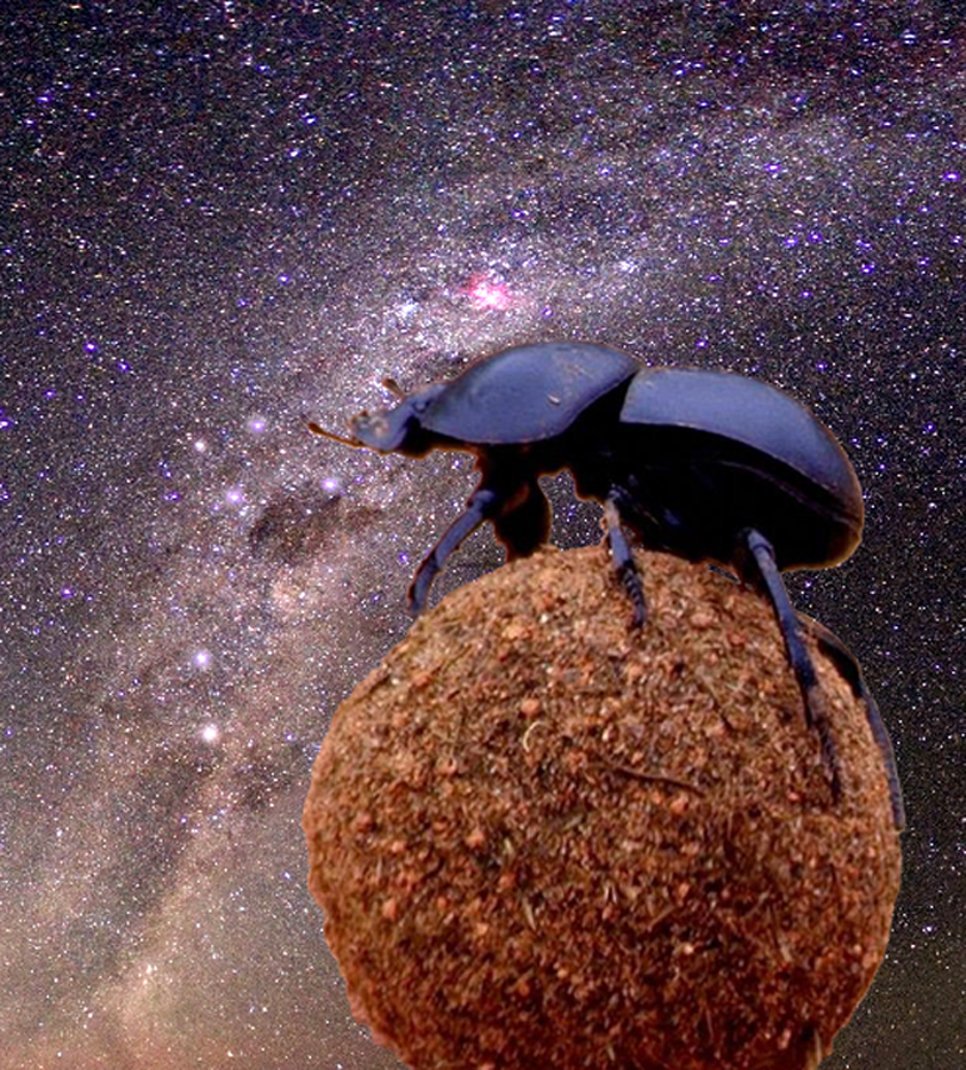
In a planetarium, the beetles stayed on track equally well under a full starlit sky and one showing only the diffuse streak of the Milky Way.
That makes sense, the researchers explain, because the night sky is sprinkled with stars, but the vast majority of those stars should be too dim for the beetles’ tiny compound eyes to see.
The findings raise the possibility that other nocturnal insects might also use stars to guide them at night.
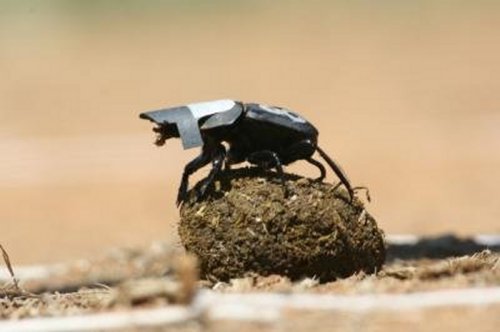
On the other hand, dung beetles are pretty special. Upon locating a suitable dung pile, the beetles shape a piece of dung into a ball and roll it away in a straight line. That behavior guarantees them that they will not return to the dung pile, where they risk having their ball stolen by other beetles.
See also:
Tiktaalik Roseae: A 375-Million-Year-Old Fish Had Fins For Walking
St. Elmo’s Fire – Ancient Plasma Phenomena Seen By Sailors Worldwide
“Dung beetles are known to use celestial compass cues such as the sun, the moon, and the pattern of polarized light formed around these light sources to roll their balls of dung along straight paths,” Dacke said.
“Celestial compass cues dominate straight-line orientation in dung beetles so strongly that, to our knowledge, this is the only animal with a visual compass system that ignores the extra orientation precision that landmarks can offer.”
First version of this article was originally published on January 14, 2013
MessageToEagle.com
Related Posts
-
 Forbush Decrease: Dangerous Event That Can Affect Human Health, Technology, Earth’s Environment
-
 The Higgs Particle Could Have Ended The Universe By Now – Here’s Why We’re Still Here
-
 Extraordinary Photographic Memory Of Genius Stephen Wiltshire
-
 Pristimantis Mutabilis: Shape-Shifting Frog In The Ecuadorian Cloud Forest
-
 Ring Of Fire: Gigantic Zone Of Frequent Earthquakes And Volcanic Eruptions
-
 Asperatus Clouds: Intriguing, Spectacular And Ominous-Looking Cloud Formation That Gives Dramatic Visual Effects
-
 El Zacaton: World’s Dеереѕt Wаtеr-Fillеd Sinkhole
-
 Where Do Diamonds Come From?
-
 Foldable Shape-Shifting 3-D Material Can Change Size, Volume And Shape
-
 Tristan da Cunha: The Remotest Inhabited Island

