
Tristan da Cunha: The Remotest Inhabited Island
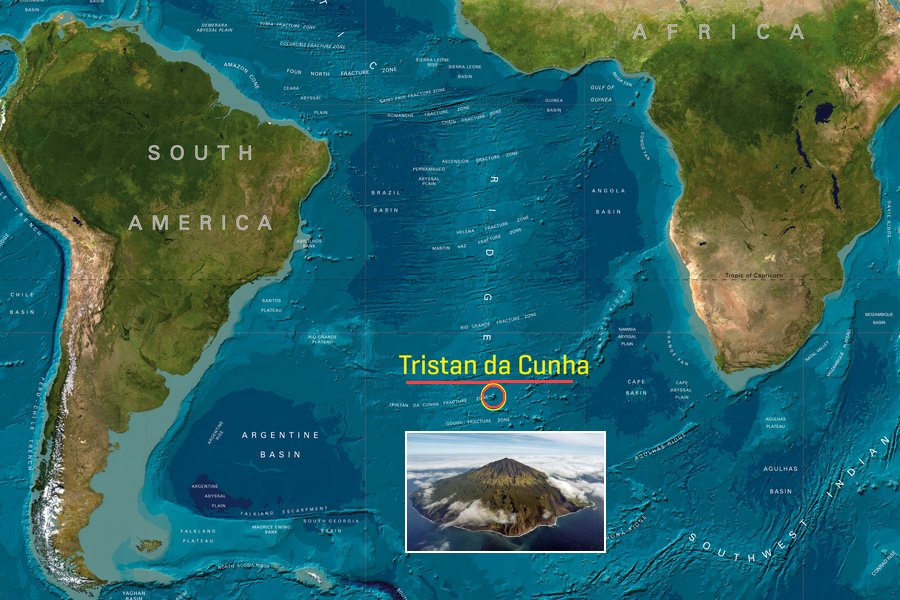
MessageToEagle.com – Tristan da Cunha is a 38-square-mile volcanic outpost and the remotest inhabited island in the world, according to the Guinness Book of Records.
It’s situated 1,510 miles southwest of its nearest neighbor, St. Helena, and 1,950 miles west of Africa. Discovered by the Portuguese admiral of the same name in 1506, and settled in 1810, the isle belongs to Great Britain and has a few hundred residents.
Coming in a close second – and often wrongly cited as the most distant land – is Easter Island, located 1,260 miles east of its nearest neighbor, Pitcairn Island, and 2,300 miles west of South America.
See also: Amasia – New Future Supercontinent
The mountainous 64-square-mile island was settled around the 5th century, supposedly by people who were lost at sea. They had no contact with the outside world for more than a millennium, giving them plenty of time to construct more than 1,000 enormous stone figures, called moai, for which the island is most famous.
On Easter Sunday, 1722, however, Dutch settlers moved in and gave the island its name. Today, 2,000 people inhabit the Chilean territory. They share one paved road, a small airport, and a few hours of television per day.
MessageToEagle.com
Expand for referencesReferences:
Related Posts
-
 What Is The Kármán Line?
-
 People Can Float In The Dead Sea
-
 Scattered Light Makes The Sky Blue
-
 Othello Syndrome – Brain Disorder Leading To Morbid Jealousy
-
 Råbjerg Mile: Largest Moving Sand Dune In Northern Europe
-
 Huge Molten Iron River Is Moving Rapidly Beneath Our Feet – It’s Heading Towards Europe
-
 Gravity Travels At The Speed Of Light – Confirmed For The First Time Ever
-
 Sleep Paralysis: Being Awake And Unable To Move
-
 Angry People Live Longer
-
 What Colors Can Newborn Babies See?

