
Japanese Hinoki Root Essential Oil May Support Better Sleep At Home
Eddie Gonzales Jr. – MessageToEagle.com – Sleep problems are common in middle age, particularly among women in their 40s and 50s. In a new study, the researchers explored whether essential oils derived from Hinoki (Chamaecyparis obtusa), known as Japanese cypress, roots could help improve sleep quality.
Participants reported fewer nighttime awakenings, improved morning feelings, and brain-wave patterns suggesting smoother sleep onset.
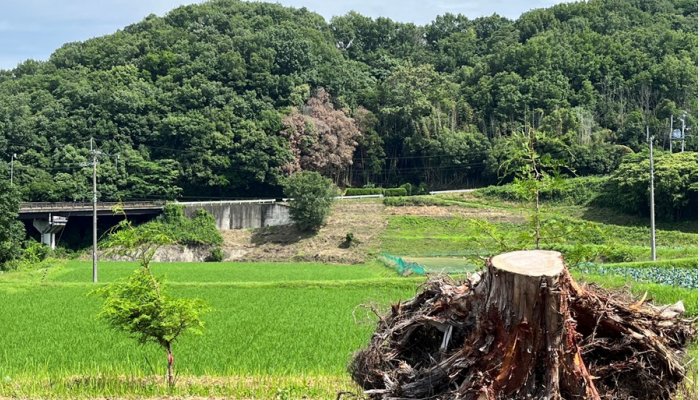
Hinoki is widely used as timber in Japan, but people often leave its roots unused after logging. These roots contain aromatic compounds and can be used to produce essential oils. Although essential oils derived from Hinoki branches and leaves have been studied previously, much less is known about those obtained from its roots.
“We wanted to address two questions: whether essential oil production could add value to underused Hinoki roots and whether that oil could improve sleep,” says Associate Professor Kuniyoshi Shimizu from Kyushu University’s Faculty of Agriculture. “In our earlier work, we examined sleep quality over a single day in a laboratory-like setting. However, sleep is strongly influenced by daily routines and the home environment. Therefore, we decided to examine the effect of repeated use over two weeks in participants’ own bedrooms using both subjective assessments and physiological measurements.”
Twelve Japanese women aged 35–60 years took part in a single-blind crossover study. Each participant used Hinoki root essential oil for two weeks and an unscented control for two weeks. At bedtime, participants placed three drops of the oil in a paper cup, inhaled the aroma for 10 seconds, and then left the cup about 30 cm from their nose while they slept. Their sleep was monitored using a wearable brain-wave headband, a smartwatch, and a questionnaire completed each morning.
Repeated use of Hinoki root essential oil was associated with favorable changes in several measures of sleep. By day 13, participants reported feeling less sleepy upon waking and more recovered from fatigue than when using the control. Smartwatch measurements also showed fewer nighttime awakenings. Brain-wave recordings further indicated that, after seven days of using the Hinoki essential oil, participants showed greater delta-wave activity around sleep onset, a pattern consistent with a smoother transition into deeper sleep. Participants rated the Hinoki aroma as more relaxing, comfortable, likable, elegant, nostalgic, and woody than the control.
“By combining physiological measurements with participants’ subjective assessments, we were able to examine sleep from multiple perspectives under everyday home conditions, which was an important aspect of this study,” emphasizes Shimizu. “Our findings suggest that repeated use of Hinoki root essential oil at home may support sleep initiation, sleep continuity, and feeling refreshed in the morning.”
One possible application is the development of Hinoki root-based aroma products for use in bedrooms or other relaxation settings. Because the study used a simple method—placing a small amount of essential oil near the bed—it may also provide a useful model for evaluating aromatic materials under everyday home conditions. More broadly, the findings may encourage the use of Hinoki roots and other forestry residues as higher-value materials rather than leaving them underused. Further research would be needed to determine appropriate products, doses, and usage conditions.
Written by Eddie Gonzales Jr. – MessageToEagle.com Staff Writer
Related Posts
-
 New DNA Study Reveals Dogs Have Been Humans’ Friends For 33,000 Years
-
 Unexpected Discovery Behind Biermann Battery Effect Phenomenon
-
 Can Magic Mushrooms Make Us More Creative And Better Problem Solvers?
-
 New Flying Gecko Species Reveals Hidden Biodiversity Of Northern India
-
 Controversial New Theory Suggests Earth Will Be Cooling Down Before 2017 – Have Global Warming Predictions Been Exaggerated?
-
 Narwhals Help Uncover Unique Data From The Deepest East Greenland Fjords
-
 Researchers Identified 5,500 New RNA Virus Species
-
 Mystery Of Jupiter’s Incredible Journey To Our Solar System Revealed
-
 Rare Full Cold Moon On Christmas Day – For The First Time Since 1977
-
 Reign Of Papua New Guinea’s Megafauna Lasted Long After Humans Arrived

